
6/5-6/7: SCARY MOVIE, BACKROOMS and OBSESSION Make Moviegoers Laugh and Scream and Exhibitors Cheer

Horror movies fueled the weekend box office, led by Paramount’s comic SCARY MOVIE with $55M in its opening and holdovers BACKROOMS adding $25.9M and OBSESSION contributing $25.6M. The total for all films came in at $183.0M, compared with $112.8M on the same weekend last year, when Disney’s LILO & STITCH in its third weekend offered $32.4M and Lionsgate’s BALLERINA opened with $24.5M. 2026 has now outsold 2025 for the last two weekends.
While Amazon MGM’s MASTERS OF THE UNIVERSE and Fathom’s THE AMAZING DIGITAL CIRCUS contributed, the majority of the box office came from SCARY MOVIE, BACKROOMS and OBSESSION, adding up to $93.6M or 51% of total sales. The unexpectedly strong performance of horror movies over the last month and our enthusiasm over the upcoming movies this summer have led us to raise our annual box office forecast to $9.1B for the domestic market. Even with the 2026 Memorial Day weekend coming in 34% lower than last year’s, the box office over the last four weeks is running higher than it was in the same period from 2025.
The Last Four Weeks – 2026 vs. 2025

#1 – SCARY MOVIE
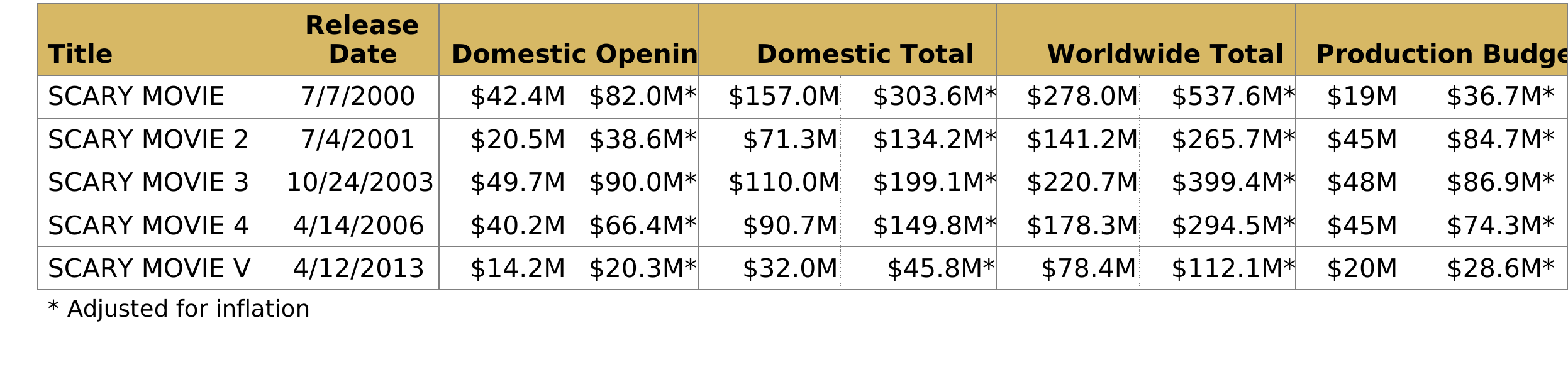
Paramount’s horror comedy SCARY MOVIE in its opening weekend outsold all others with $55.0M. It also did very well in foreign markets, making for a worldwide opening three days of $105.5M. This is the sixth movie in the series, with the first five taking in $461M domestically and $896M worldwide. This weekend’s SCARY MOVIE is the top opening of the bunch, slightly ahead of SCARY MOVIE 3’s $49.7M in 2003. However, after adjusting the numbers to account for inflation over time, SCARY MOVIE 3 would have earned $90.0M in 2026 dollars, which would make it the top-grossing movie opening of the series. Here is a recap of the franchise’s box office performance:
SCARY MOVIE Box Office History
Considering the success of the SCARY MOVIE franchise, one might ask why it took 13 years to release another sequel. One reason is that the franchise lost its creative identity after the departure of the Wayans brothers from the project. Keenen Ivory Wayans, Marlon Wayans, and Shawn Wayans drove the first two films but were pushed out after disputes with the then Weinstein-controlled Dimension Films over compensation, royalties, and creative control. The franchise continued without them, producing SCARY MOVIE 3, 4, and 5, but many felt that the series lost its voice with their absence. In recent interviews, Marlon Wayans said that the SCARY MOVIE franchise was “stripped” from his family after the second film.
Another factor was the progressive downturn in the sequels’ commercial and critical success. While SCARY MOVIE 3 and SCARY MOVIE 4 were profitable, SCARY MOVIE 5 received poor reviews and lacked most of the franchise’s signature cast, including Anna Faris and Regina Hall. The disappointing response made studios less eager to pursue the next chapter in the series. The changing Hollywood landscape also played a role. The spoof-comedy genre that thrived in the 2000s largely disappeared during the 2010s as audiences shifted toward superhero films, elevated horror, and franchise blockbusters. Many parody films released after 2010 underperformed, making studios reluctant to invest in another SCARY MOVIE.
Another significant obstacle was the ownership and rights of its intellectual property. The collapse of The Weinstein Company and the shutdown of Dimension Films after the Harvey Weinstein scandal complicated the future of the franchise. Only after Miramax and Paramount Pictures revived the property and convinced the Wayans brothers to get back involved did the path for a new film open up.
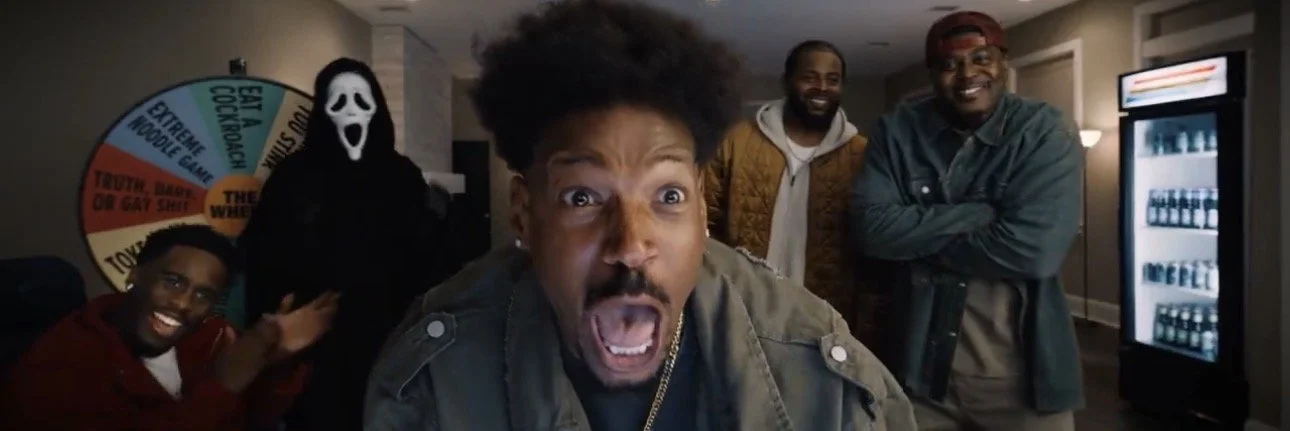
The new SCARY MOVIE arrives 26 years after the original, which landed as a surprise box-office hit at the time. This year’s movie marks the return of the franchise to its original creative roots, with the reengagement of Marlon Wayans, Shawn Wayans and Keenen Ivory Wayans. The film was directed by Mike Tiddes, best known for directing the parodies A HAUNTED HOUSE, A HAUNTED HOUSE 2, and FIFTY SHADES OF BLACK. The new movie brings back many of the original cast members, including Anna Faris (THE HOUSE BUNNY, MOM), Regina Hall (GIRLS TRIP, THE BEST MAN), Marlon Wayans (WHITE CHICKS, AIR), Shawn Wayans (WHITE CHICKS, LITTLE MAN), and Jon Abrahams.
The story follows Cindy, Brenda, Ray and Shorty 26 years after surviving the original Ghostface-style murders as they once again find themselves pursued by a masked killer while becoming entangled with monsters and supernatural threats. The film’s satire targets modern culture, such as social media influencers, artificial intelligence, OnlyFans culture, true-crime obsession, COVID-era behavior, and horror-movie tropes. The Wayans brothers have described the movie as a return to the rapid-fire, boundary-pushing style that made the first two films beloved.
If you are a horror movie fan, you have probably seen many of the films that SCARY MOVIE parodies, including SCREAM, M3GAN, THE SUBSTANCE, GET OUT, NOPE, SINNERS, WEAPONS, LONGLEGS, HERETIC, TERRIFIER, HALLOWEEN, FINAL DESTINATION, CANDYMAN, and I KNOW WHAT YOU DID LAST SUMMER. SCARY MOVIE even works in a sequence that takes on the iconic JOHN WICK action franchise.
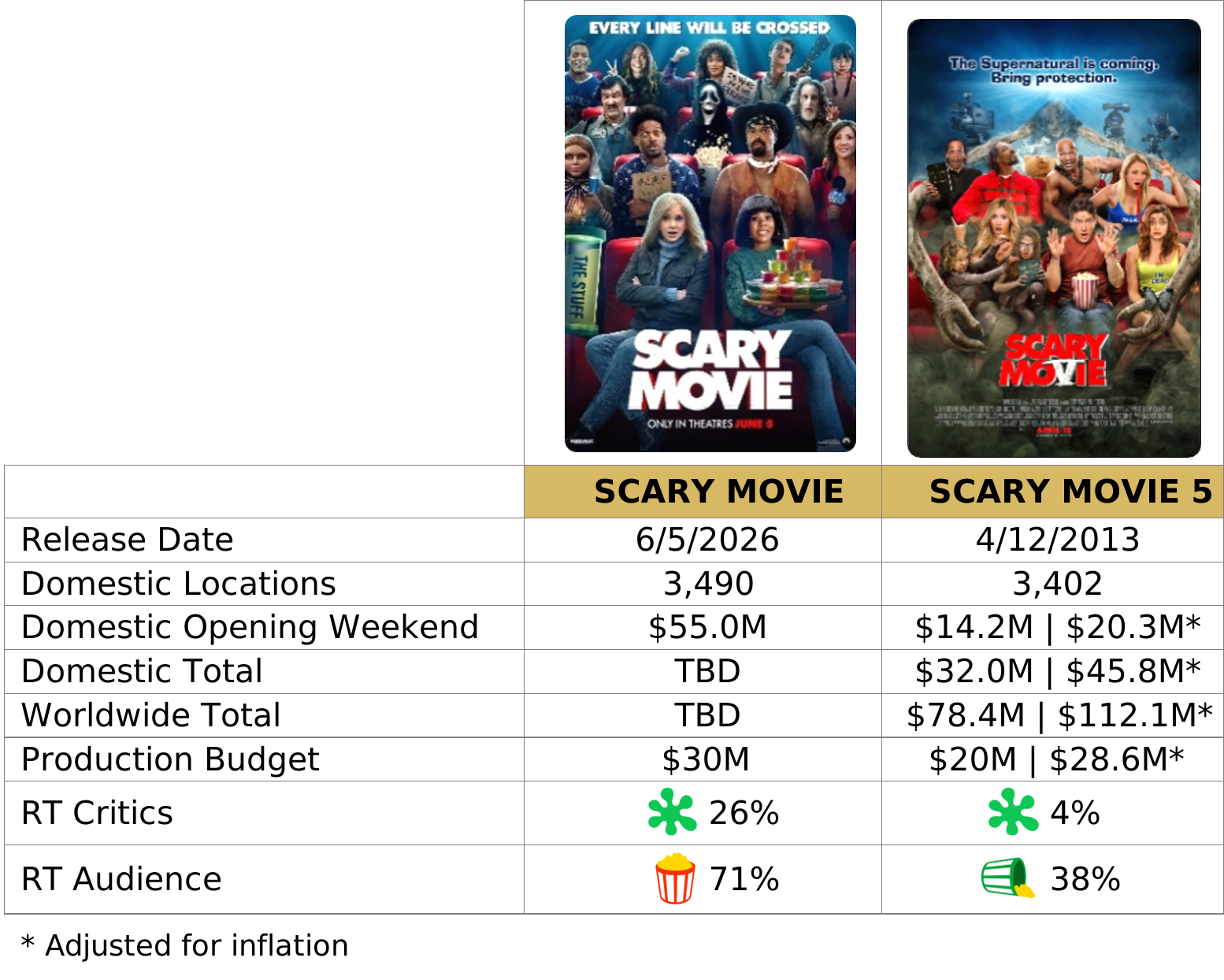
Critics have always been unimpressed by the SCARY MOVIEs, with previous films averaging a 26% rating from reviewers and an even more alarming 47% from audiences. This year’s movie has the typical 26% score from critics but a franchise-high 71% from audiences. The Associated Press’ reviewer says, “Especially toward the end, the filmmakers tread water with their references to ‘M3GAN,’ ‘Get Out’, ‘Candyman’ and ‘The Substance’ — simply showing us a set-up from those films without doing anything to really skewer them.” The Hollywood Reporter feels, “This kind of broad, slapstick parody needs a steady stream of laugh-out-loud moments, but the new Scary Movie generates barely a trickle.” Variety weighs in with, “It’s jammed with spoof-genre history, but that makes it feel more exhausting than exhilarating. It’s a top-heavy satirical party that’s become so meta it’s meh.” IndieWire is positive when it says, “The good news is that the Wayans have still mostly reclaimed the franchise they founded… For longtime “Scary Movie” fans, that development alone carries enough genuine emotional weight to make a trip to the movie theater worthwhile.”
With a production cost of $30M, the film will need to earn $75M in global ticket sales to become theatrically profitable. For a comparison film, we have chosen 2013’s SCARY MOVIE 5, the most recent movie in the series. We want to see if the declining trend that has plagued the franchise is being reversed with the return of the Wayans.
SCARY MOVIE vs. SCARY MOVIE 5
#2 – MASTERS OF THE UNIVERSE
MASTERS OF THE UNIVERSE from Amazon MGM finished in second place in its opening weekend with $29.3M. Foreign markets took its global opening to $54.0M. The movie is based on one of the most successful and influential toy properties in Mattel’s history. After Mattel passed on acquiring the toy rights to STAR WARS in 1977, the toy giant sought to create their own in-house line of boy-centered action-packed characters. MASTERS OF THE UNIVERSE was conceived in 1981 and launched in 1982. Unlike the 3.75-inch figures popularized by STAR WARS, Mattel’s toy figures were larger, heavily muscular 5.5-inch action heroes that stood out on toy shelves. The original lineup included He-Man, Skeletor, Man-At-Arms, Beast Man, Teela, Mer-Man, Stratos, and Zodac, along with the iconic Castle Grayskull playset.
Mattel transformed the toy line into a cultural phenomenon by creating an expansive mythology around the characters who existed inside a fantasy world called Eternia. The animated cartoon series HE-MAN AND THE MASTERS OF THE UNIVERSE, which aired from 1983 to 1985, turned He-Man into a household name. The combination of toys, television, comics, licensing, and merchandise made MASTERS OF THE UNIVERSE one of the earliest fully integrated multimedia franchises.
The brand became a commercial powerhouse, with annual sales reaching $400M in 1985, outselling even Barbie. At its peak, He-Man sales matched or surpassed those of G.I. JOE, TRANSFORMERS, and STAR WARS. However, the decline was equally dramatic, with overexposure of the brand through an expanding roster of secondary characters. Sales plunged from $400M to $7M within a year, one of the steepest collapses in toy industry history.
Despite that downturn, the franchise never fully disappeared. Mattel revived the property several times through THE NEW ADVENTURES OF HE-MAN in 1990, another reboot in 2002, a collector-focused MASTERS OF THE UNIVERSE CLASSICS line in 2008, and the successful MASTERS OF THE UNIVERSE ORIGINS line beginning in 2020. Today, Mattel sees MASTERS OF THE UNIVERSE as a key growth brand alongside Barbie and Hot Wheels. More than four decades after its inception, the franchise remains one of the most recognizable toy brands in the world.
The current MASTERS OF THE UNIVERSE movie is the first live-action adaptation since the 1987 feature MASTERS OF THE UNIVERSE starring Dolph Lundgren as He-Man and Frank Langella as Skeletor. The latest movie was almost two decades in development, with stops at Sony Pictures and Netflix before landing with Amazon MGM. The film was directed by Travis Knight, whose previous credits include KUBO AND THE TWO STRINGS (2016) and BUMBLEBEE (2018). Knight’s goal was to deliver a large-scale fantasy adventure that honored the mythology of Eternia while remaining accessible to audiences who are unfamiliar with the original toys and animated series.
The film stars Nicholas Galitzine as Prince Adam/He-Man. Galitzine is best known for PURPLE HEARTS in 2022, RED, WHITE & ROYAL BLUE in 2023, and THE IDEA OF YOU in 2024. The impressive supporting cast includes Camila Mendes, Idris Elba, Jared Leto, Alison Brie, Morena Baccarin, and Kristen Wiig. The movie’s storyline follows Prince Adam, who has been living on Earth after being separated from Eternia as a child. Upon discovering the Sword of Power, Adam returns to his home world, embraces his destiny as He-Man, and confronts Skeletor in a battle for Castle Grayskull.
Critical reception has varied from mixed to positive. The film currently holds a 66% critics’ score on Rotten Tomatoes, while audiences have responded far more enthusiastically with an 87% rating. The Wall Street Journal describes it as “a two-hour-plus comedy-and-effects bonanza,” while Rolling Stone criticizes its reliance on nostalgia. The New York Post praises it as lighthearted entertainment, while The San Francisco Chronicle sees it as straightforward fantasy adventure delivered with conviction, humor, and heart.
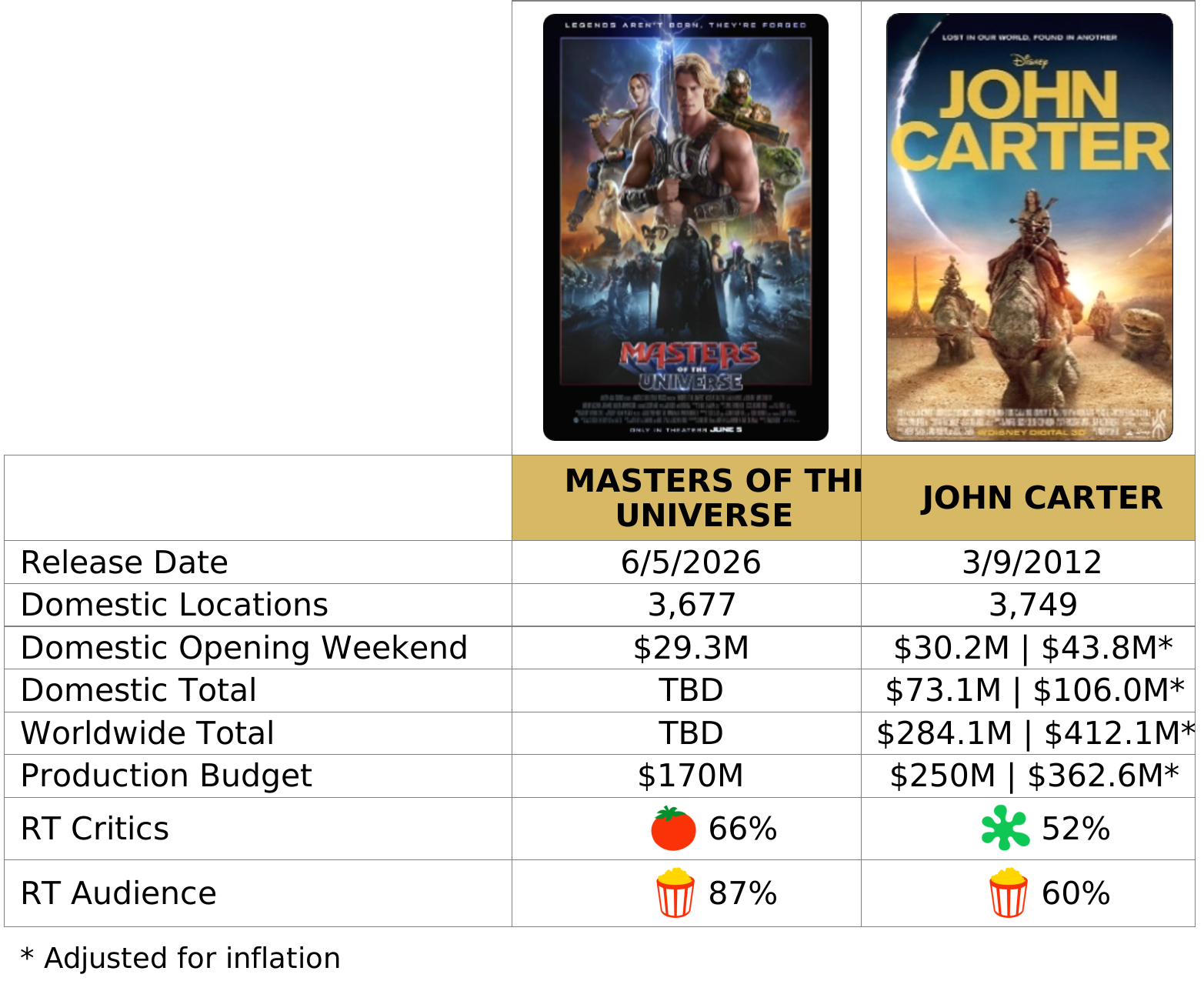
Amazon MGM is swinging for the fences for the second time this year, after its earlier bet on PROJECT HAIL MARY. That film was an unqualified success for the revived major Hollywood studio, generating $679.7M in worldwide sales after spending a reported $200M to make the movie. Amazon MGM spent an estimated $170M to make MASTERS OF THE UNIVERSE, which should translate to a box office target of approximately $425M in worldwide sales to break even on the project. After a decent opening weekend total of $29.3 domestic and $54.0M worldwide, it all depends now on how well the film holds up in the weeks ahead. For a comparison film, we have selected JOHN CARTER since both films center on an ordinary man from Earth who is transported to a fantastical world and becomes a legendary warrior destined to help save that world.
MASTERS OF THE UNIVERSE vs. JOHN CARTER
#3 – BACKROOMS
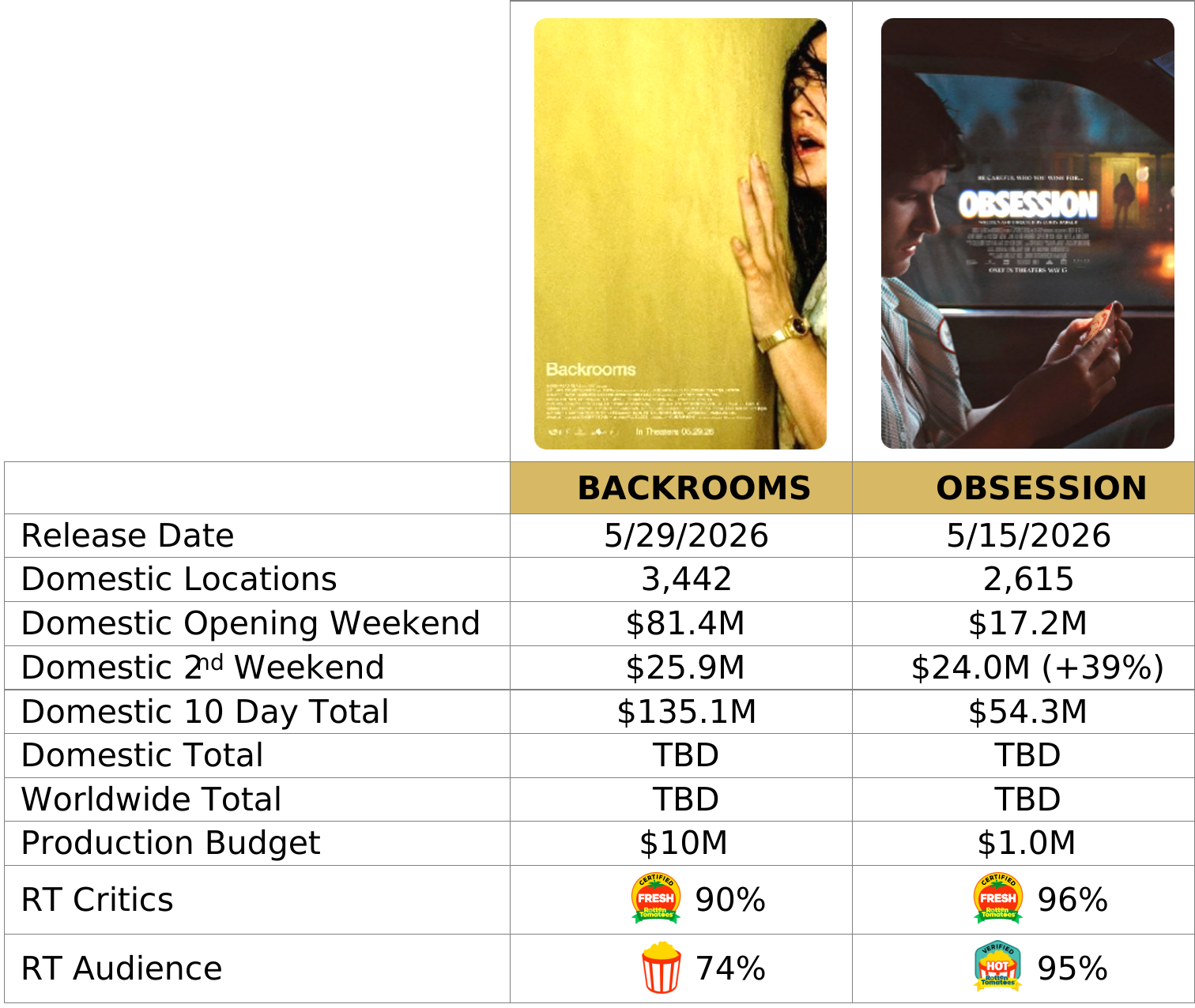
A24’s horror sensation BACKROOMS fell from first to third place in its second weekend, grossing $25.9M and dropping 68%. This brings its 10-day totals to $135.1M domestically and $212.7M worldwide. After last weekend’s explosive debut of $81.4M, the sharp second-weekend decline suggests that demand for this film was front-loaded, with a passionate fan base rushing out early to create in a record-setting opening weekend for the independent horror title. Disappointing results in subsequent weekends demonstrates the challenge of sustaining momentum beyond a core audience of devotees.
BACKROOMS and OBSESSION have followed completely different box office trajectories, with BACKROOMS exploding out of the gate with an opening box office that was nearly five times higher than OBSESSION’s. Under virtually any normal scenario, a $64M opening-weekend advantage for a film would make it a clear winner over its much smaller rival. Instead, OBSESSION is turning into one of the year’s most remarkable examples of word-of-mouth-driven success.
OBSESSION has built its audience over time through exceptionally strong audience recommendations and repeat viewership. It is rare to see a film grow its box office from its opening weekend to its second frame, unless that also comes with a significant expansion in the number of locations where it plays. Growing ticket sales once again in its third weekend is almost unheard of. The film managed these gains without any significant expansion in the number of theatres where it has been playing. New audiences sought out the film where it had already been playing, rather than it becoming available in new areas.
BACKROOMS has followed a different path to its box office success, taking advantage of pent-up demand from an online fan base of short-form content. The comparison between the two films lines up with the classic tortoise and the hare fable. While BACKROOMS may ultimately finish with the larger total gross, OBSESSION’s week-to-week endurance has positioned it to potentially narrow what once appeared to be an insurmountable gap.
Another fascinating aspect of this story is that both films are playing in theatres at the same time, competing for the attention of the same R-rated horror audience. Conventional wisdom would suggest that the success of one film would cannibalize the results of the other. Instead, these two titles have expanded the marketplace, proving that when audiences are excited about specific titles, multiple movies of the same genre can do well together.
None of this should diminish the extraordinary accomplishment of BACKROOMS. The film has already generated a worldwide gross-to-budget ratio of 21-to-1, making it one of the most profitable theatrical releases of the year. It remains a major success story for A24, filmmaker Kane Parsons, and the growing pipeline of creators who have built audiences on YouTube and other online platforms before their arrival as a feature filmmaker. With a number of solid earning weeks still ahead, BACKROOMS has already achieved both creative and commercial success. The only question now is whether OBSESSION’s unprecedented staying power can wind up pushing it ahead of BACKROOMS with its massive opening weekend.
BACKROOMS vs. OBSESSION after 10 Days
#4 – OBSESSION
Focus Features’ horror film sensation OBSESSION continues to bring in both new and repeat moviegoers, grossing an additional $25.6M this weekend, a decline of only 7% from last weekend. After 24 days in release, the film has earned $152.1M domestically and $224.8M worldwide.
The success of OBSESSION and A24’s BACKROOMS has been one of the most talked about industry stories of the early summer. While both films have sold a lot of tickets and more than expected, the real story has been their extraordinary profitability.
At Screendollars, we measure a film’s profitability from its theatrical run by comparing its worldwide box office to its production budget. The rule of thumb is that a movie breaks even once it has brought in a worldwide box office equal to 2.5 times its production budget. So, a movie that costs $100M to produce will break even if it grosses $250M worldwide.
While OBSESSION has earned $224.8M in box offices worldwide so far, it cost only $1M to produce. This results in an astonishing 225-to-1 revenue-to-cost ratio. Movies that wind up with a 5-to-1 ratio are considered handsomely profitable, so OBSESSION’s 200-to-1 ratio is virtually unprecedented. In practical terms, OBSESSION crossed over into profitability after the first few hours of Thursday preview screenings before its official opening day on Friday May 15.
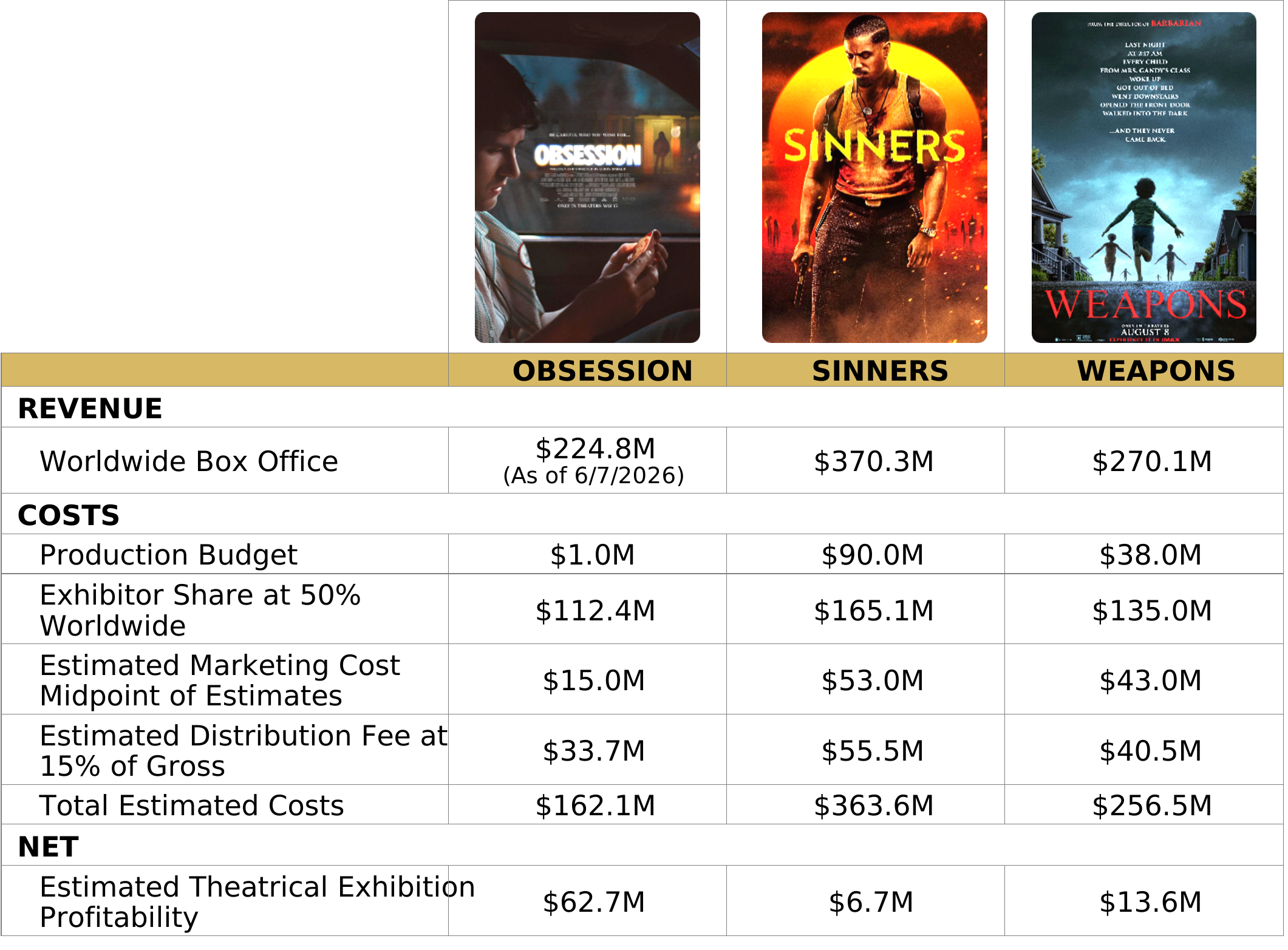
This raises the question of how OBSESSION compares to other recent horror movie success stories? It’s revealing to compare OBSESSION to two of 2025’s most successful horror movies, SINNERS and WEAPONS, both from Warner Bros.
Based on our model for determining a movie’s profitability from theatrical sales, the far smaller OBSESSION has already been more profitable than the much higher-profile SINNERS and WEAPONS. While both of these 2025 movies were commercial successes, their significantly larger budgets resulted in a much higher measuring stick for profitability.
Of course, revenue from the box office represents only the first phase of a movie’s financial life. Any movie will also generate downstream revenue from Premium Video on Demand sales, streaming licenses and subscriptions, television licenses, DVD sales and other home entertainment income. We expect OBSESSION to do well with these ancillary revenue streams as well.
As a Focus Features movie, OBSESSION will ultimately become part of the Universal content library, with Peacock serving as its initial home on streaming. The film’s extraordinary success in theatres has pushed back its debut on streaming, allowing Universal to maximize its earnings from the box office.
OBSESSION has become one of the most impressive movie success stories in years. The combination of a microscopic production budget, exceptional response from audiences, and sustained box office performance over time has created a degree of profitability rarely seen in modern filmmaking.
PROFITABILITY OF HORROR HITS: OBSESSION, SINNERS AND WEAPONS
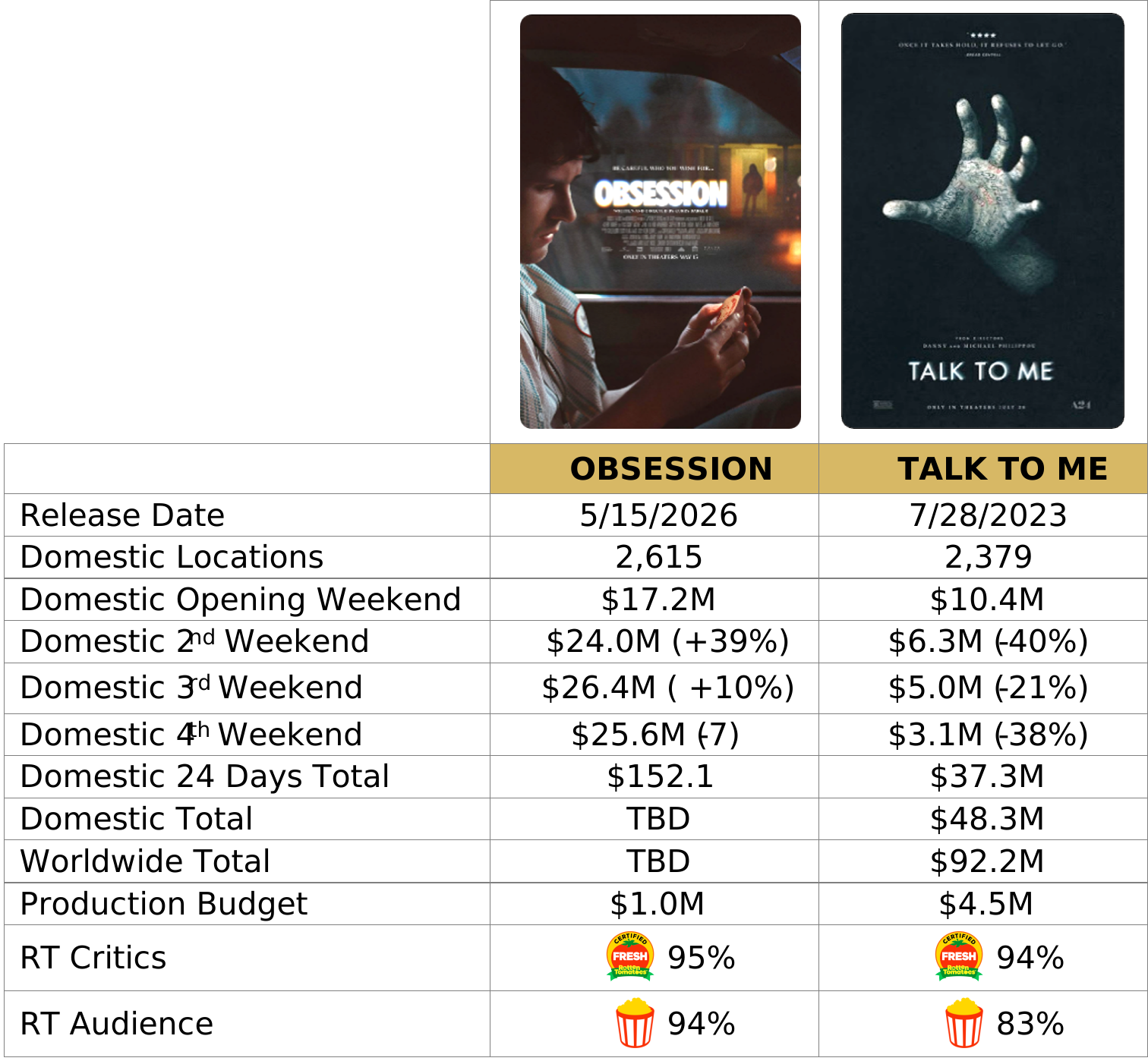
Here is an up-to-date comparison of OBSESSION to the movie we chose to measure it against when it first opened, A24’s TALK TO ME from 2023.
OBSESSION vs. TALK TO ME after 24 Days
#5 – THE AMAZING DIGITAL CIRCUS: LAST ACT
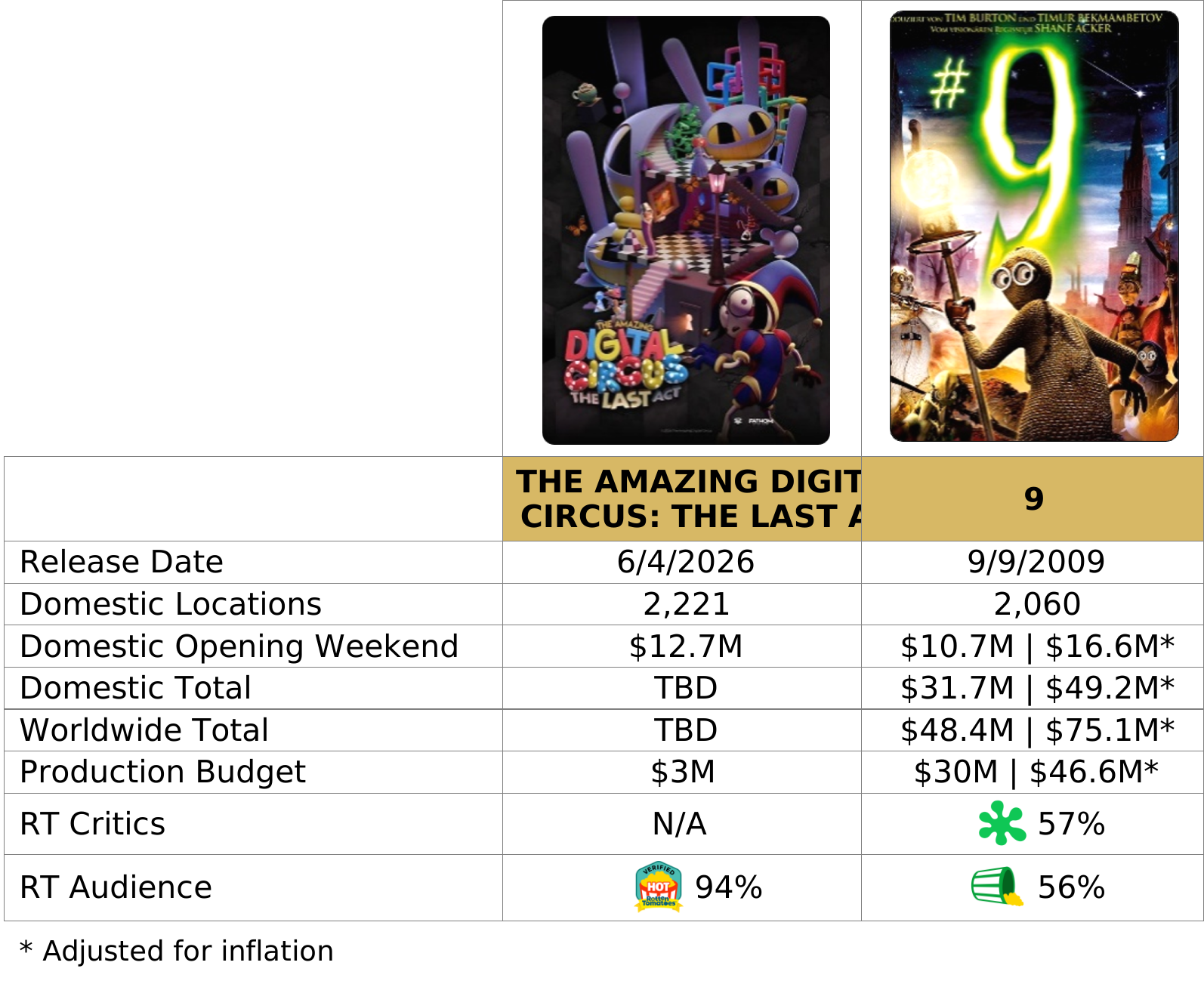
THE AMAZING DIGITAL CIRCUS: THE LAST ACT, distributed by Fathom Entertainment, finished fifth with $12.7M in ticket sales in its first weekend. Having opened on Thursday, the film has earned $21.1M over its first four days through Sunday.
In one of the most unexpected box office trends of 2026, YouTube is becoming Hollywood’s “farm system” for new ideas and content. This marks the third theatrical release since May 15th to trace its origins back to YouTube. With OBSESSION on May 15th, BACKROOMS on May 29th and now THE AMAZING DIGITAL CIRCUS: THE LAST ACT on June 4th, all three films finished in this weekend’s Top Five at #4, #3, and #5 respectively. Just 30 days ago, few industry observers would have predicted that YouTube-born properties would become such a meaningful force in theatres. These three titles have generated $308.3M domestically so far, and played a significant role in the recent uptick in moviegoing.
THE AMAZING DIGITAL CIRCUS began as an independent animated web series created by Gooseworx and produced by Glitch Productions. After the pilot episode premiered in October 2023 on YouTube, it became an instant hit, amassing 100s of millions of views quickly and eventually topping 400 million views for the pilot alone and over 1 billion views across the entire series of videos.
Unlike traditional animated franchises that originated at studios such as Disney, DreamWorks, or Pixar, THE AMAZING DIGITAL CIRCUS was financed, distributed, and nurtured online. Its audience was built organically through fan art, reaction videos, livestreams, social media discussions, and word-of-mouth sharing. Millions of viewers discovered the series without the benefit of a television network or major studio marketing campaign. The success of the YouTube series eventually led to licensing agreements with Netflix, an extensive merchandise program, and ultimately a nationwide theatrical release.
THE AMAZING DIGITAL CIRCUS: THE LAST ACT represents the culmination of that remarkable journey—a property born on YouTube evolving into a nationwide theatrical event. More importantly, it highlights a potential new pathway where Hollywood studios can find interesting content. Traditionally, entertainment properties moved from theaters to television and eventually to streaming. In the cases of THE AMAZING DIGITAL CIRCUS, OBSESSION, and BACKROOMS, that process has been reversed, with online audiences fueling theatrical demand.
The film was initially planned as a four-day event release. However, extraordinary advance ticket sales prompted an expansion from approximately 900 theaters to 2,221 locations nationwide. Strong demand also led Fathom Entertainment to extend the engagement through June 18th.
The film was written and directed by Gooseworx, whose pre-CIRCUS career consisted primarily of animated shorts, music videos, web animation projects, and other online content rather than traditional feature filmmaking. THE AMAZING DIGITAL CIRCUS and its theatrical finale represent Gooseworx’s breakthrough into mainstream entertainment.
The voice cast includes Lizzie Freeman, best known for THE SEVEN DEADLY SINS: GRUDGE OF EDINBURGH (2022), along with Michael Kovach of MURDER DRONES (2021) and LACKADAISY (2023), Alex Rochon, Amanda Hufford, Marissa Lenti, and Sean Chiplock.
The story follows Pomni and the remaining inhabitants of the Digital Circus after the disappearance of Caine. Forced to confront their past traumas and the true nature of the virtual prison in which they exist, the characters uncover the origins of the circus and embark on a final attempt to escape. The film blends psychological horror, dark comedy, mystery, and science fiction into a unique animated experience.
The centerpiece of the release is Episode 9, which runs approximately one hour—roughly double the length of a standard episode. To create a feature-length presentation of approximately 95 minutes, the theatrical version includes an additional 30 minutes of DIGITAL CIRCUS content. The theatrical release gives fans the opportunity to see the final episode nearly two weeks before its online debut.
Critical reviews have been limited, without enough reviews yet to qualify for an official critics’ score on Rotten Tomatoes. However, the audience reaction has been overwhelmingly positive, with a 94%.
Production costs have been estimated at approximately $3M, positioning the film to generate an exceptionally strong return on investment and healthy overall profitability once all revenue streams are accounted for.
As a comparison title, we have selected 9 (2009). That animated feature followed a small group of characters trapped in a mysterious post-human world controlled by forces they barely understood. Like THE AMAZING DIGITAL CIRCUS, it combined stylized visuals, dark themes, existential questions, and an appeal that extended beyond younger viewers to older teens and adults. If THE AMAZING DIGITAL CIRCUS reaches the same $31.7M domestic gross that 9 did, it would be seen as a strong return for the Fathom release, especially given its limited engagement and original event-only release strategy.
THE AMAZING DIGITAL CIRCUS: THE LAST ACT vs. 9
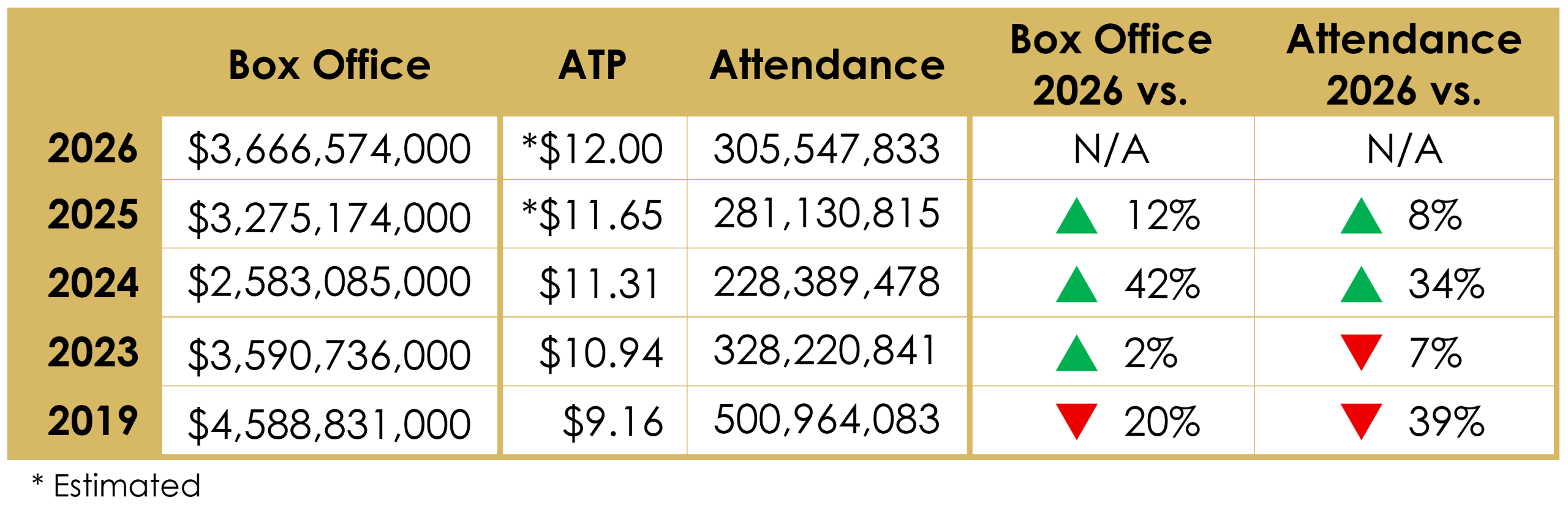
Where Are We as of 6/4/2026
BOX OFFICE AND ATTENDANCE – 22 WEEKS YEAR TO DATE
Related DICK WALSH's Industry Update

Low-Budget Backrooms and Obsession Overwhelm Traditional Hollywood Fare

THE MANDALORIAN AND GROGU Shines in STAR WARS’ Return to the Big Screen
MICHAEL Moonwalks Past PRADA 2 into First Place
Mothers Keep THE DEVIL WEARS PRADA 2 on Top
THE DEVIL WEARS PRADA 2 Is Proving Worth the 20-Year Wait