

Psychological thriller movies deliver scares on a deeper level than traditional horror.
Instead of jump scares or gore, these films prey on our minds with mind games, paranoia, and mental horror that lingers long after the credits. While a slasher might shock you with a sudden jolt, a great psychological thriller unsettles you with slowly mounting dread and cerebral horror. As Alfred Hitchcock famously said, “There is no terror in the bang, only in the anticipation of it.” In psychological thrillers, fear builds in that anticipation – the uneasy feeling that something is very wrong even if you can’t see it.
This contrasts with traditional horror (which often relies on physical threats or monsters), meaning psychological thrillers tap into disturbing films that explore the darkness within human minds. The terror is intimate and personal: an unreliable perception of reality, a mind game between hunter and prey, or a character’s own psychosis turning their world upside down. It’s horror from the inside out, making us question what we’d do in the same situation.
In this article, we’ll count down the Top 20 scariest psychological thrillers ever made – the films that best exemplify this suspense movie subgenre where atmospheric tension and mental torment reign. We’ll also dive into what makes these movies so frightening, common themes (like isolation, cinematic tension, unreliable narrators, and psychological horror), and how the suspense genre has evolved from Hitchcock’s era to today’s streaming hits.
Whether you’re a seasoned thriller fan or a newcomer looking for must-watch thrillers or film noir, get ready for a deep dive into cinema’s most character-driven narratives and mind-bending tales.
What Makes a Psychological Thriller Truly Scary?
What sets a psychological thriller apart from a standard horror movie? In a word: psychology.
These films disturb and unsettle us by exploiting mental and emotional fears, rather than just physical threats. Instead of obvious monsters, the danger often comes from human minds – unstable characters, hidden secrets, psychological manipulation, or the protagonist’s own sanity. Key elements include tension, ambiguity, and the unseen. For example, psychological thrillers thrive on atmospheric tension: a slow-burning sense of dread that something terrible is looming, even during ordinary moments.
Directors achieve this through ominous mise-en-scène (plot twists with every shadowy hallway or distorted mirror reflection add unease) and chilling sound design (a faint whisper, a creaking floorboard) that keeps viewers on edge. We rarely get the catharsis of seeing the “monster” outright; instead, our imagination fills in the blanks – which is far scarier.
Another hallmark is the use of narrative structures with unreliable narrators or twisted character psychology. We often experience the story through the eyes of someone we cannot fully trust – perhaps they’re paranoid, delusional, or being gaslighted. This means we start to question what’s real, sharing the character’s confusion, fear, and mental breakdown. Classic examples range from the delusions of Norman Bates in Psycho to the hallucinatory grief of the mother in Hereditary.
The result is a film that keeps you guessing and second-guessing. Plot twists are common, but the best psychological thrillers aren’t just about a gotcha ending – they build a pervasive mood of anxiety and moral ambiguity. We might sympathize with a villain or doubt a hero. Moral lines blur, heightening our discomfort.
Cinematography and editing also play subtle mind games. A psychological thriller might use long, lingering shots to build unbearable suspense (think of how Kubrick’s camera glides down the Overlook’s halls in The Shining, creating dread with each slow turn). Or it might fragment reality with quick cuts and dreamlike imagery (as in Black Swan or Jacob’s Ladder), pulling us into a character’s psychology and their disoriented mental state. We can also feel the paranoia in film through sound.
Soundtracks lean on eerie drones, heart-like drum beats, or sudden silence to tighten the nerves. Even pacing is weaponized: many of these films are slow-burning suspense movies that start quietly and end with a crescendo of terror, leaving viewers emotionally exhausted. Ultimately, a psychological thriller is truly scary when it leaves a lasting psychological impact. You walk away not just startled, but haunted.
It is the ultimate trick of ‘dread vs. fear,’ and you’d keep replaying scenes in your head, pondering the film’s themes, or feeling a lingering sense of unease due to the cognitive dissonance.
As Alfred Hitchcock put it, “I believe in putting the horror in the minds of the audience, and not necessarily on the screen.” By focusing on psychological manipulation, protagonist psychology and their inner demons, and unseen threats, these movies make our own imagination the accomplice to fear.
And as film theory says, ‘nothing is scarier than what our minds can conjure up’.
Ranking Criteria & Methodology
Ranking the top 20 psychological thrillers of all time is a daunting task – after all, fear is subjective, and each of these films brings something unique. To create our list, we considered several factors.
- Fear factor was key: how effectively does the film instill dread, tension, or mind-chilling terror? We looked for movies that deliver that spine-tingling feeling of impending doom and leave you rattled afterwards.
- We also weighed critical reception and movie ratings. Many entries on our list are award-winners or cult favorites that earned strong critical consensus – they’re not just scary, but excellently crafted films.
- We consulted sources like Rotten Tomatoes, IMDb ratings, box office performance, and award histories to gauge critical reception. For instance, our #1 film earned rave reviews as “one of the scariest films ever made,” according to critics.
- Cultural impact and historical importance played a role as well. Some of these thrillers pioneered new tropes or influenced countless other movies, making them indispensable in any film rankings of the genre.
- We aimed to balance classic trailblazers with modern innovations. You’ll find 1960s black-and-white nightmares alongside 2010s hits that reinvented the genre for a new era.
- This mix acknowledges how the genre evolution has unfolded over time. We also sprinkled in a few international films that English-speaking audiences might have missed, since psychological terror knows no borders.
- Our methodology isn’t purely scientific – there’s a bit of subjectivity and debate inherent in any “top films” list. Personal experience and audience reception matter in judging horror; what gave one viewer nightmares might merely unsettle another.
- Each film was evaluated for its storytelling, atmospheric tension, character psychology, and the memorability of its scares and plot twists that cause re-watchability. Eg: Does it intrigue you enough to lose one more night of sleep?
- Finally, we considered longevity: these movies don’t just deliver a momentary jolt; they endure as the best thriller movies that continue to terrify audiences on repeat viewings. So, with our criteria set, let’s turn down the lights and count down the top 20 scariest psychological thrillers of all time – and why they earned their place.
The Top 20 Scariest Psychological Thrillers (Ranked #20 to #1)
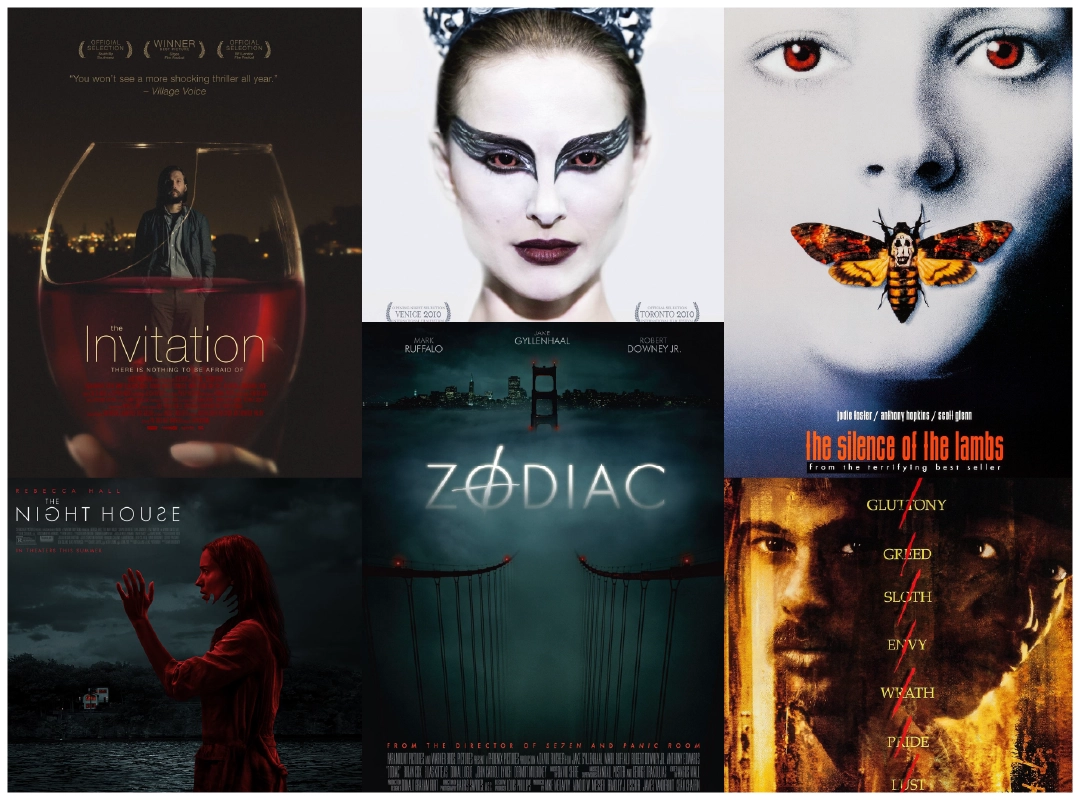
20. The Invitation (2015) – Dir. Karyn Kusama
Synopsis: A man and his girlfriend attend a dinner party at his former home, hosted by his estranged ex-wife and her new friends. What begins as an awkward reunion among friends slowly turns into a tense nightmare as the hosts’ disturbing motives become suspect. Is it all in his head – a product of his grief over a past tragedy – or is something truly sinister unfolding behind the polite smiles?
What Makes It Scary: The Invitation is a masterclass in slow-burn atmospheric tension. From the moment Will steps into that dimly lit Hollywood Hills house, we sense something is off. The film exploits social anxiety as its weapon: the horror of psychological manipulation hiding under friendly small talk.
Standout Elements: Logan Marshall-Green gives a vulnerable performance as Will, a man haunted by grief who senses the evening’s eerie undercurrents. Equally chilling is John Carroll Lynch as a soft-spoken guest whose presence radiates quiet menace. The production makes great use of the single-location setting; the house’s narrow hallways and closed doors fuel a claustrophobic feeling that something could spring out at any moment.
Critical Reception: The Invitation was widely praised as an exceptional indie thriller. It holds a 90% rating on Rotten Tomatoes, with the consensus calling it a “tension-rich…slow-building thriller.”
Cultural Impact: Though not a mainstream blockbuster, The Invitation has become a cult favorite in thriller circles. It’s often recommended as a prime example of cerebral horror that doesn’t rely on gore or ghosts – just pure suspense and human paranoia. Its exploration of cult mentality and the dangers of ignoring red flags has kept viewers talking (and perhaps made some think twice about attending sketchy dinner parties!). In the landscape of 2010s horror, it stands out for its realism and relatability – the fear that polite society could mask murderous intent.
Why It’s #20: Kicking off our list, The Invitation earns its spot for turning a simple dinner gathering into a nerve-shredding ordeal. While it might be a quieter film than some higher-ranked entries, its mind games and final payoff are truly haunting. We placed it at #20 because, compared to others on this list, it’s a slow simmer that might not terrify everyone at the same intensity. But for those attuned to social tension and paranoia, this movie is pure nightmare fuel. It’s the perfect appetizer for our thriller feast – unsettling, smart, and likely to make your heart race next time you’re at a weird dinner party.
Where to Watch: The Invitation is currently streaming (subscription) on Peacock, and available for free with ads on services like Pluto TV. You can also rent or buy it on VOD platforms (Amazon Video, Apple TV, etc.). (Availability may change, so check your preferred platform.)
19. The Night House (2020) – Dir. David Bruckner
Synopsis: After the unexpected death of her husband, a woman named Beth (Rebecca Hall) is left alone in the lakeside dream house he built for her. Grieving and isolated, Beth begins to experience strange occurrences in “the night house” – phantom knocks on the door, strange footprints, and unnerving dreams. As she goes through her late husband’s belongings, she uncovers disturbing secrets that suggest she never really knew the man she married. Is a malevolent presence haunting her home, or is Beth’s mind playing tricks as she spirals through grief?
What Makes It Scary: The Night House expertly blends supernatural chills with the psychological horror of grief and depression. The film creates fear through atmospheric tension – the lake house is shadowy and quiet at night, every mirror and dark corner a potential source of dread. Director David Bruckner employs clever optical illusions and sound cues that make you question, along with Beth, what’s real. One moment, you see a figure in the negative space of a doorway; in another, you hear a barely-audible whisper that sets your nerves on edge. This approach makes the audience feel the character’s psychology: Beth’s loneliness and confusion become our own. The scares here are largely of the “did I really see that?!” variety, which can be incredibly effective. The story delves into moral ambiguity and the terror of not truly knowing the one you love.
Standout Elements: Rebecca Hall’s performance is the anchor here. She portrays Beth with raw authenticity – sarcastic and strong-willed on the surface, but clearly fragile and haunted underneath. Her portrayal of a woman pushed to the brink by grief (and perhaps by a literal demon) gives the film its emotional core. The plot twists here are emotionally devastating. By the end, The Night House delivers a confrontation with a nihilistic force that embodies depression itself, which is a concept that lingers like a bad dream.
Critical Reception: Critics responded positively to The Night House, particularly praising its creativity and Hall’s performance. It holds a high Rotten Tomatoes score (around 88% fresh), with many reviews noting it as one of the standout horror/thrillers of 2021.
Cultural/Historical Relevance: This film arrived amid a wave of “grief horror” (think Hereditary, The Babadook) and managed to carve its own niche. By personifying abstract issues like loss and suicidal ideation as a literal haunting, it connects with viewers who appreciate horror as a way to explore real emotional struggles. While The Night House didn’t have huge box office or pop-culture penetration, it’s quickly become a recommended title for those seeking a sophisticated psychological fright. It also continues director David Bruckner’s streak as a rising horror talent (he’s since directed the new Hellraiser). In years to come, this could be seen as a cult classic of the 2020s.
Why It’s #19: We ranked The Night House at 19 because it delivers deeply unsettling chills and an original story, though its pacing and cerebral twist might not be for everyone. This film doesn’t assault you with constant scares; instead, it sneaks under your skin. Some viewers might find the ambiguity and slowunravelingl a bit frustrating compared to more visceral thrillers higher on the list. But for those who appreciate an intelligent, moody horror that makes you think (and maybe sleep with a night light), The Night House stands tall. Its ability to make emptiness and silence feel menacing is a true psychological feat – earning it a well-deserved spot here.
Where to Watch: The Night House is available to stream on HBO Max (varies by region) and on certain live TV streaming services (fuboTV, YouTube TV). You can also rent or purchase it on platforms like Amazon Prime Video, Apple TV, or Vudu. (Check current availability, as streaming rights may change.)
18. The Autopsy of Jane Doe (2016) – Dir. André Øvredal
Synopsis: In a small-town morgue, a father-son coroner team (played by Brian Cox and Emile Hirsch) receives a mysterious case: the body of an unidentified young woman found half-buried at a crime scene. As they perform the late-night autopsy, they discover baffling injuries – her organs are scarred as if she’d suffered terrible trauma, yet outwardly there’s not a scratch on her. With each incision, the puzzle deepens, and unexplainable events start occurring around the mortuary. Trapped in the basement lab by a sudden storm, the coroners realize that Jane Doe may not be dead in the usual sense… and that some secrets are better left undisturbed.
What Makes It Scary: The Autopsy of Jane Doe turns a clinical procedure into a claustrophobic nightmare. Most of the film is set in one autopsy room, which becomes a pressure cooker of tension. The scares are both visceral and psychological: on one hand, you have the inherently creepy nature of dissecting a corpse (especially one that stares back with cloudy eyes and a hint of a smirk). On the other hand, there’s a mounting atmospheric tension as inexplicable things happen – radios fuzz out to eerie songs, lights flicker, elevators malfunction, and something is thumping around in the air ducts. Director André Øvredal uses slow-burn suspense masterfully; every time the coroners peel back another layer (literally) on Jane Doe, we brace for what they’ll find. By the time the supernatural elements fully reveal themselves, we are already on edge from the oppressive mood and gruesome discoveries.
Standout Elements: The film’s tight focus on two protagonists in one location gives it an intimate, unnerving quality. Brian Cox, as the seasoned father coroner, brings gravitas and a calm demeanor that slowly fractures as the night goes on. Emile Hirsch plays the son as more openly rattled, giving the audience a relatable surrogate for the mounting panic. Their father-son dynamic and gallows humor early on make them likable, which is crucial – we care about them when hell breaks loose.
Critical Reception: The Autopsy of Jane Doe was a critical success, especially on the festival circuit. It boasts a strong 86% Rotten Tomatoes score, with reviewers praising its ingenuity and sustained tension.
Cultural/Historical Relevance: This film helped kick off a trend of contained, one-location horror-thrillers (much like Green Room or Don’t Breathe did around that time), proving you don’t need a big budget or multiple sets to terrify audiences. It introduced Norwegian director Øvredal to a wider audience (he later directed Scary Stories to Tell in the Dark).
Why It’s #18: We placed The Autopsy of Jane Doe at 18 because of its razor-sharp focus on cerebral horror and sheer effectiveness in eliciting fear. Few films can make a motionless body this frightening. The reason it’s not higher is simply that the competition above is fierce – some higher-ranked entries have broader scope or even more shattering impact. But make no mistake: in terms of craft and fright-per-minute, Jane Doe is top-tier.
Where to Watch: The Autopsy of Jane Doe is currently streaming on AMC+ and Shudder (horror-focused service), and is available on Paramount+ as well. It can also be found free (with ads) on platforms like Tubi or via library services like Kanopy. Additionally, you can rent/buy it on Amazon, Apple TV, etc. (As always, check the latest availability.)
17. Speak No Evil (2022) – Dir. Christian Tafdrup
Synopsis: During a holiday in Tuscany, a Danish family befriends a seemingly warm and fun-loving Dutch family. Months later, the Danes receive an invitation to visit the Dutch couple’s home for a weekend getaway. What begins as a pleasant reunion gradually becomes an unbearably awkward and unsettling experience, as the hosts’ behavior turns strangely intrusive and cruel. The Danish parents attempt to be polite guests, even as red flags multiply. Over one tension-filled weekend, social niceties give way to a nightmare of manipulation, humiliation, and horror – all unfolding under a veneer of normalcy.
What Makes It Scary: Speak No Evil takes the concept of “holiday from hell” and cranks it into pure psychological terror. This film weaponizes social discomfort to almost unbearable levels. Imagine being in a remote house with hosts who start violating boundaries – disciplining your child, making inappropriate comments, pushing your tolerance – and you feel too polite to leave. That creeping dread of “something is very wrong here” builds scene by scene. Director Christian Tafdrup masterfully stretches the audience’s nerves by showing everyday interactions (dinnertime conversations, a drive into town) laced with subtext and subtle menace. The viewer, like the visiting family, keeps wondering, “Are we overreacting? Or are these people truly dangerous?” This uncertainty is terrifying in itself.
Standout Elements: Performances are key here. The actors portraying the Danish couple (Morten Burian and Sidsel Siem Koch) and the Dutch couple (Fedja van Huêt and Karina Smulders) are pitch-perfect. The Danes come off as reasonable, kindly people who become increasingly uncomfortable but are paralyzed by politeness.
The cinematography captures the idyllic countryside and cozy interiors with a sense of irony – how can such lovely settings hide such evil? By daylight, everything appears fine (sun-dappled roads, smiling faces), but at night, the house feels like a trap.
Critical Reception: Speak No Evil made a splash at film festivals and garnered strong reviews for its bold approach. It holds around 83-85% on Rotten Tomatoes, with critics calling it “savage” and “nerve-wracking.”
Cultural/Historical Relevance: This film is part of a wave of Scandinavian psychological thrillers/horrors that pull no punches (others include The House That Jack Built and Let the Right One In, albeit the latter with supernatural elements). Speak No Evil strikes a chord in our era of social etiquette versus personal safety. In an almost Jordan Peele-esque way (think Get Out without the levity), it uses horror to reflect on societal pressures – here, the fear of offending.
Why It’s #17: We placed Speak No Evil at 17 because it delivers an exceptionally potent gut-punch of atmospheric tension and shock, though its grim payoff may be too much for some viewers. This is one of the most disturbing films on our list in terms of emotional impact – especially the final scenes, which will have even hardcore thriller fans shuddering. It’s ranked here (and not higher) because, while terrifying, its rewatchability might be lower (given how brutal it is), and it’s a relatively new film still earning its classic status. Nonetheless, its fearless dive into human cruelty and the horrors of not speaking up secures its place among the scariest psychological thrillers. Consider this entry a dare: it’s a brilliantly crafted film that might traumatize you more than any ghost could.
Where to Watch: Speak No Evil is streaming on Shudder and AMC+ (as a Shudder Exclusive). It’s also available on Hoopla (free with a library card). If you can’t access those, you may rent them on services like Amazon or Apple TV. (Be prepared – this one’s intense.)
16. Black Swan (2010) – Dir. Darren Aronofsky
Synopsis: Nina Sayers (Natalie Portman) is a shy, perfectionist ballerina whose lifelong dream is to dance the lead in Swan Lake. When she finally lands the coveted dual role of the delicate White Swan and the seductive Black Swan, the pressure mounts. Under the demanding guidance of her artistic director (Vincent Cassel) and the shadow of a talented newcomer (Mila Kunis), Nina becomes obsessed with achieving perfection. As opening night approaches, her grip on reality loosens – she experiences eerie hallucinations, encounters a doppelgänger of herself, and feels her body undergoing strange changes. Caught between repression and desire, Nina’s pursuit of artistic transcendence spirals into psychological horror.
What Makes It Scary: Black Swan is a dizzying descent into psychosis, blurring the line between reality and hallucination in genuinely unsettling ways. Darren Aronofsky infuses this film with an intense, paranoid atmosphere. The audience is locked into Nina’s perspective – as she starts seeing sinister reflections in the mirror or imagining her rival turning into her double, we’re as freaked out and unsure of what’s real as she is. The horror in Black Swan comes from internal forces: Nina’s own repressed emotions and perfectionism create a kind of monster inside her. There are scenes of body horror (like Nina hallucinating peeling a piece of her skin off, or her legs snapping like a swan’s), which serve as metaphors for her psychological strain. These moments are brief but shocking, because they invade an otherwise grounded world with nightmarish imagery. Beyond that, the film maintains a constant atmospheric tension: the camera often follows Nina in long, unbroken takes through claustrophobic backstage corridors, making us feel like something could leap out from the shadows or her mind could crack at any second. The competitive friendship/foe dynamic with Mila Kunis’s character adds a layer of psychological manipulation – is Lily (Kunis) really trying to undermine Nina, or is Nina imagining malice that isn’t there? That uncertainty is nerve-wracking.
Standout Elements: Natalie Portman’s Oscar-winning performance is absolutely the standout. She embodies Nina’s fragility and ferocity in equal measure, physically transforming for the dance sequences and emotionally transforming as her character unravels. Watching her shift from innocent to unhinged is both thrilling and frightening. Mila Kunis provides a perfect foil as the earthy, free-spirited Lily – whether she’s friend or foe is part of the intrigue.
Aronofsky’s direction and the film’s technical aspects greatly enhance the psychological terror. The mise-en-scène is laden with mirrors, reflecting Nina’s fragmented identity and creating visual tricks – sometimes you think you saw something move in a mirror that shouldn’t, making you question your own eyes. The color palette contrasts stark whites and blacks, mirroring the swan roles and Nina’s dual nature. The editing in key sequences (like the club scene or the final performance) becomes frenetic and almost horror-like, with quick cuts to hallucinations. And we can’t forget the music: Tchaikovsky’s Swan Lake score is used to brilliant effect, swelling at moments of both beauty and terror. It gives the film a grand, operatic dread.
Critical Reception: Black Swan was widely acclaimed, earning five Oscar nominations (including Best Picture) and a win for Portman. Critics praised it as “electrifying” and effectively disturbing – a rare horror-thriller that crossed over into prestige cinema. It sits at about 85% on Rotten Tomatoes, with praise for its bold blending of high art and horror tropes.
Cultural/Historical Relevance: Black Swan stands out as a moment when psychological horror entered the awards conversation in a big way. It sparked discussions about the pressures on young women in competitive fields and mental health in the arts. The term “black swan” became a shorthand for someone’s dark alter-ego or breakdown (often referenced in pop culture). The film also pays homage to classics like The Red Shoes (another ballet psychodrama) and Roman Polanski’s Repulsion (1965) with its theme of a young woman’s mental disintegration – thereby connecting itself to a lineage of psychological thrillers. Its success arguably paved the way for other “elevated horror” films in the 2010s to be taken seriously by critics and studios.
Why It’s #16: We rank Black Swan at 16 because it’s a near-flawless melding of arthouse and horror that delivers genuine chills and a powerful story. The reason it isn’t higher is that some above it are more outright terrifying or foundational to the genre. Black Swan is deeply unsettling and has a few outright frightening sequences, but it’s also a beautiful, tragic drama. Its scares serve a poignant story about identity and pressure. For some, the horror in Black Swan might feel more metaphorical than literal compared to, say, the in-your-face terror of Hereditary or The Shining. Nonetheless, it belongs solidly on this list – the psychological torment Nina undergoes, and the film’s climactic transformation scene (where she “becomes” the Black Swan on stage, red eyes and all), are as haunting as anything in pure horror. This film will make you empathize with a breakdown and shudder at the same time, and that’s a special kind of scare.
Where to Watch: Black Swan is currently streaming on Hulu in the US (via the Star or Disney+ content for international viewers). It’s also available on HBO Max in some regions, and can be rented or purchased on Amazon Prime, Apple TV, etc. (Check your region’s streaming platforms for availability.)
15. Suspiria (2018) – Dir. Luca Guadagnino
Synopsis: A reimagining of the 1977 cult classic, this Suspiria is set in 1970s Berlin, where a renowned dance academy serves as a front for a coven of witches. Susie Bannion (Dakota Johnson), a young American woman from a Mennonite background, arrives to audition and quickly ascends as the company’s new star pupil under the mentorship of the enigmatic artistic director, Madame Blanc (Tilda Swinton). As Susie becomes more entwined with the academy’s dark rituals, another dancer who attempted to expose the coven’s secrets has gone missing. Meanwhile, an aging psychotherapist investigates the academy after one of his patients (also a dancer) confides sinister tales. The film unfolds in six acts and an epilogue, culminating in an intense, nightmarish sabbath that reveals the true nature of the coven and Susie’s fate.
What Makes It Scary: Guadagnino’s Suspiria is a slow-burning fever dream of cerebral horror. It’s not about jump scares; it’s about a pervasive sense of wrongness that coils tighter and tighter around you. The horror manifests in unsettling visuals and scenarios: one standout scene is an early dance rehearsal where Susie’s movements, guided by Madame Blanc, supernaturally inflict grotesque contortions on another dancer’s body elsewhere in the academy. It’s a scene of body horror that is nearly impossible to watch without wincing – limbs bending and cracking in unnatural ways –, but it’s also stylishly choreographed, a horrific dance in itself. That blend of art and gore sets the tone. Throughout the film, the atmosphere is thick with dread; you feel the weight of history (post-war Berlin and the ongoing German Autumn backdrop) pressing in, mirrored by the literal walls of the academy, which seem to hide secrets in their baroque designs. The atmospheric tension is heightened by unconventional editing and dreamlike sequences that flash glimpses of disturbing imagery (occult symbols, maggots, distorted faces) as if invading Susie’s mind and our own. By the time the film reaches its climax – a hallucinatory witches’ sabbath bathed in red light and dripping with Grand Guignol blood – the terror is both shockingly visceral and surreal. It’s the kind of horror that makes you feel like you’re witnessing a taboo ritual you shouldn’t be seeing.
Standout Elements: Tilda Swinton’s performance (or rather, performances) is remarkable. She plays not only Madame Blanc with ethereal poise and underlying menace, but also (under heavy prosthetics) the elderly male psychotherapist Dr. Klemperer and even another key figure during the climax. Swinton disappears into these roles, and her commitment grounds the film’s more outré moments with emotional truth. Dakota Johnson brings a quiet intensity to Susie, evolving from naïve ingenue to something far more commanding by the end. The dynamic between Susie and Madame Blanc – part maternal, part predatory – is compelling and loaded with psychological complexity.
The film’s technical craft is top-notch. The muted, bleak color palette (a sharp turn from the original’s neon colors) and production design give a feeling of decaying elegance. Thom Yorke’s score is haunting in a different way than Goblin’s famous 1977 score: it’s melancholic, with moments of ethereal beauty that contrast the horrors on screen. This Suspiria also doesn’t shy from exploring themes: guilt and shame from WWII, the power dynamics between women in a closed environment, and the allure of giving oneself over to a darker power. These themes simmer below the surface, giving the horror a brainy, arthouse edge.
Critical Reception: The 2018 Suspiria was divisive – some critics adored its ambition and audacity, while others found it overlong or too self-indulgent. It holds about a 65% on Rotten Tomatoes (so not universally acclaimed), but those who love it, love it. It’s been called “bold,” “unapologetically weird,” and praised for not trying to simply copy Argento’s original but doing something unique. Many singled out the aforementioned dance “contortion” scene and the final act as memorably terrifying in their own right. There was also a lot of discussion about Swinton’s triple roles and the thematic heft of the movie.
Cultural/Historical Relevance: By remaking Suspiria in such a radically different way, Guadagnino sparked plenty of debate. It’s a great example of how a cult classic thriller can be reinterpreted for a new era, infusing it with historical context and contemporary style. The film also contributes to the wave of “elevated horror” of the late 2010s – movies that mix genre with art-film sensibilities (like The Witch, Midsommar, etc.). Its exploration of a matriarchal coven and the idea of female power (twisted as it may be here) found an audience during a time when such themes were being widely examined. While Suspiria (2018) didn’t achieve mainstream popularity, it has quickly developed a passionate cult following, particularly among fans who appreciate its blend of dance, psychology, and horror.
Why It’s #15: Suspiria earns the #15 spot for its audacity and deeply haunting set-pieces. It’s an example of a film that disturbs more than it outright scares in the traditional sense, but the disturbance runs very deep. The reason it’s not higher is that its slow pace and artsy flourishes aren’t tailored to everyone’s nightmares – for some, the horror may simmer rather than boil until the explosive finale. But those willing to dive in will find images and moments in this film that are seared into memory (for many, that mirror dance scene alone qualifies Suspiria as one of the scariest psychological horrors of recent years). Its exploration of manipulation, trust, and surrendering oneself to a collective evil is profoundly eerie. On our list, it stands as the grand, grisly witch-dance that challenges and chills in equal measure.
Where to Watch: Suspiria (2018) is available on Amazon Prime Video (it was an Amazon Studios release, so it’s often included with Prime). You can also rent or buy it on other services like YouTube or Vudu. The original Suspiria (1977) is on Tubi and Shudder for those curious to compare. (Ensure you have the right year when searching, as both versions are out there.)
14. Diabolique (1955) – Dir. Henri-Georges Clouzot
Synopsis: In this classic French thriller (original title: Les Diaboliques), the fragile wife of a cruel boarding school headmaster and his mistreated mistress form an unlikely alliance. United by their mutual hatred for the man, the two women hatch a plan to murder him and dump his body in the school’s neglected swimming pool. But after the deed is done, the body mysteriously disappears. As the police find no trace, the wife becomes wracked with guilt and paranoia. Eerie events follow – a figure resembling the husband is sighted, and unsettling clues suggest he might be alive. Did he somehow survive, or is someone playing twisted mind games? The suspense builds toward one of cinema’s most legendary twist endings.
What Makes It Scary: Diabolique is often hailed as a blueprint for the modern psychological thriller. It creates terror through suspense and uncertainty rather than overt horror imagery. The premise itself is chilling: imagine committing what you think is the perfect murder, only for the corpse to vanish – your worst fear of getting caught mixed with the uncanny feeling that the dead might not be dead. Clouzot’s direction wrings every drop of tension from this setup. He places the audience in the conspirators’ shoes, making us complicit and hence anxious. As the meek wife, Christina (Véra Clouzot), starts seeing signs of her husband’s possible return, her terror is contagious. A quiet scene like Christina walking through the dark school corridors at night becomes nerve-jangling because we suspect something – maybe a ghost, maybe a vengeance-seeking husband – could be around the next corner. The film’s black-and-white cinematography casts deep shadows, giving it a film noir look that enhances the dread.
The final sequence is a masterstroke of cinematic tension. Without spoiling, it involves a dim bathroom, a full bathtub, and a figure slowly rising – a scene staged so effectively that audiences in 1955 reportedly leapt from their seats. Even today, that climax retains its power, delivering both a scare and a shocking revelation. The true horror of Diabolique is psychological torment: guilt, fear of retribution, and the feeling of being driven mad by inexplicable events. The film famously ends with a title card urging viewers not to reveal the secrets to others – a testament to how impactful its mind-bending twist was (and still is).
Standout Elements: The performances anchor the film’s believability and tension. Véra Clouzot (the director’s wife, in fact) portrays Christina with a tremulous vulnerability; you genuinely worry for her heart condition as stress piles on. Simone Signoret as Nicole (the mistress) is cooler and more calculated, providing a sharp contrast and an intriguing dynamic between the two women, collaborators who don’t entirely trust each other. Their interplay keeps you guessing about loyalties and possible double-crosses.
Clouzot’s pacing is superb. The murder plot and execution occupy a significant early chunk of the film, playing out almost like a procedural, which makes the later supernatural suggestions (is the husband haunting them?) all the more creepy. The school setting adds to the atmosphere: the daily, mundane life of pupils and teachers continues in the background, oblivious to the dark drama unfolding among the adults. This contrast heightens our sense that the women are isolated in their secret, which in turn heightens the suspense. The script also peppers in red herrings and side characters (like a Columbo-esque retired detective who starts snooping around) to build up the mystery.
Critical Reception: Diabolique was a smash upon release and has since been regarded as one of the great thrillers of all time. Legendary director Alfred Hitchcock was reportedly a bit jealous – the story goes that Clouzot snapped up the rights to the source novel just before Hitchcock could, leading Hitch to later make Psycho, perhaps in a spirit of one-upmanship. Critics have praised Diabolique for its tight plotting and masterful suspense. It holds very high ratings (often 95%+ range on Rotten Tomatoes in retrospective reviews) and frequently appears on lists of the best horror or thriller films ever. Its influence is vast; you can see echoes of Diabolique in countless subsequent movies where conspirators are wracked by guilt and fear (for example, it’s a clear predecessor to films like Fatal Attraction or What Lies Beneath that mix infidelity, murder, and possible supernatural payback).
Cultural/Historical Relevance: Historically, Diabolique pushed boundaries for its time – it’s often cited alongside Psycho (1960) as a cornerstone of the psychological horror/thriller genre. Its twist ending was so famous that theaters supposedly had “Don’t reveal the ending!” posters (a tactic also used by Psycho later). The film directly inspired Hitchcock, and you can also see its DNA in modern plot-twist thrillers. The term “gaslighting” isn’t used here, but the film essentially presents one of the ultimate gaslight scenarios: making someone doubt their reality and sanity via elaborately staged events. In France, Clouzot was nicknamed “the French Hitchcock” after Diabolique, and the film remains a touchstone in French cinema. It was remade (poorly) in 1996 in Hollywood, but the original still stands head and shoulders above, untouched by time, in its ability to give you goosebumps.
Why It’s #14: We’ve placed Diabolique at 14 because, while it may not have the in-your-face terror of some modern horror, it is an undisputed classic that laid the groundwork for mind-game thrillers. Its scare factor comes from masterful suspense and an unforgettable payoff, rather than overt violence or shocks – but those elements are immensely effective. The reason it isn’t in our top 10 is simply that the films above tend to either pack a more intense scare punch or have even broader cultural impact. Nonetheless, Diabolique earns this high position for remaining diabolically effective. Watch it with the lights low, and you’ll find the creeping dread just as strong as any new release. Few films can so elegantly tie your nerves in knots, then completely floor you with a final twist. For anyone exploring this genre, Diabolique is required viewing – just don’t spoil the ending for the uninitiated!
Where to Watch: Diabolique (1955) is currently streaming on the Criterion Channel and HBO Max (it often appears in their classic film selections). It’s also available free on Kanopy (with a library card) or sometimes on Pluto TV/Roku Channel. A beautifully restored Criterion Collection Blu-ray exists for collectors. (Be sure to avoid spoilers – go in knowing as little as possible for the best experience.)
13. Zodiac (2007) – Dir. David Fincher
Synopsis: Based on the true story of the Zodiac Killer who terrorized Northern California in the late 1960s and 1970s, Zodiac follows three men obsessed with identifying the serial murderer. Robert Graysmith (Jake Gyllenhaal) is a cartoonist at the San Francisco Chronicle who becomes fixated on the killer’s cryptic letters and puzzles. Paul Avery (Robert Downey Jr.) is a crime reporter covering the case, and Inspector Dave Toschi (Mark Ruffalo) is the detective tirelessly hunting Zodiac. As the killer taunts the public and eludes capture, the investigation stretches over years. The film explores the toll that this prolonged mystery and cat-and-mouse game takes on those pursuing the truth, as suspects come and go and fear grips the region.
What Makes It Scary: Zodiac is a slow-burning true crime thriller that exerts a grip of paranoia and dread throughout its lengthy runtime. While it’s not a traditional horror movie, it contains some absolutely chilling sequences and an overarching atmosphere of anxiety. The fact that it’s rooted in real, unsolved crimes only amplifies the psychological unease – this isn’t a boogeyman from imagination, but a real person who might still be out there. Fincher, known for his meticulous direction, stages a few murder scenes that are terrifying in their stark matter-of-factness (the lake stabbing scene in broad daylight is particularly disturbing for its realism and abrupt brutality, and the cab driver murder evokes dread as we know what’s coming yet can’t look away). Beyond the killings, the fear in Zodiac comes from the unknown. The killer’s creepy coded letters (with lines like “I like killing people because it is so much fun”) and his phone calls, where only heavy breathing is heard, create an aura of a phantom menace who could be anyone.
One standout nerve-jangling scene involves Graysmith visiting the home of a possible suspect late at night – as the conversation turns eerie, we and Graysmith and we suspect we might be in the lair of the Zodiac himself. The tension in that scene is through the roof, even though nothing overtly violent happens. Fincher stretches the silence and the mundane creaks of the house to unbearable effect, exemplifying suspense cinema at its finest. Another layer of psychological horror is watching the toll on the protagonists: their obsession consumes them (Graysmith’s marriage disintegrates, Toschi gets taken off the case, Avery spirals into substance abuse), which imparts a sense of tragic inevitability – the Zodiac is destroying lives without even being present.
Standout Elements: The cast is terrific. Gyllenhaal portrays Graysmith’s evolution from geeky puzzle-lover to a man consumed by an idée fixe with a relatable intensity – his wide-eyed determination drags us into the rabbit hole with him. Downey Jr., in a pre-Iron Man role, is magnetic as the flamboyant but slowly unraveling reporter Avery, providing moments of levity early on that make his later decline poignant. Mark Ruffalo’s Toschi is all understated dedication, anchoring the investigation with humanity. The chemistry and dialogue among these characters (when they compare notes, chase leads, etc.) is engaging and realistic, which invests us deeply in the outcome.
Fincher’s attention to 1970s period detail and his trademark visual style (moody lighting, precise framing) immerses us in the era of rotary phones, smoky newsrooms, and creeping suspicion. The script smartly handles a complex narrative spanning over a decade, maintaining suspense even as the case goes cold. The sense of time slipping away adds a melancholic suspense – as years pass and Zodiac’s trail fades, the dread shifts into a different register: the fear of never getting closure, that lingering uncertainty. The film’s score is minimal, often letting diegetic sounds (like the needle scratching on a record player during a scary basement encounter) do the work.
Critical Reception: Zodiac was critically acclaimed, with many heralding it as one of Fincher’s best (some even say it’s his masterpiece). It didn’t win Oscars, likely because it’s a subtle thriller, but it’s got a stellar 90%+ on Rotten Tomatoes and has grown in esteem over time. Critics praised it as “mesmerizing” and noted how it transcended typical serial killer tropes by focusing on the investigation and characters. While it wasn’t a horror film per se, it appeared on several “scariest of the 2000s” lists, proof of its ability to deeply unsettle viewers.
Cultural/Historical Relevance: The Zodiac case itself is one of America’s most infamous unsolved crimes, and this film is now the definitive screen depiction of it (vastly superior to earlier, exploitative takes). It taps into our culture’s fascination with true crime and the serial killer lore, predating the current boom of true-crime podcasts and Netflix docs. In a way, Zodiac shows the personal cost of that obsession decades before “internet sleuth” culture became common. It’s also notable how the movie influenced later works; one can see Zodiac’s DNA in TV series like Mindhunter (which Fincher produced) and other sprawling investigative dramas. On a fun note, the real-life Toschi was said to inspire Clint Eastwood’s Dirty Harry, and Zodiac slyly references that, adding to its rich portrayal of the time.
Why It’s #13: We rank Zodiac at 13 for its unique brand of psychological terror – it’s not overtly scary in a blood-and-guts way, but it burrows under your skin. The idea that a killer could be hiding in plain sight, and the unnerving knowledge that this is all true, can keep you up at night more than any ghost story. Some may find the film a more tense mystery than horror, which is why we didn’t place it higher among full-throttle fright-fests. However, cerebral horror doesn’t get much better than this. The sheer anxiety the film sustains (over 2.5 hours that fly by) and the haunting final note – that lack of closure – leave many viewers deeply spooked. If you’ve ever felt uneasy walking to your car at night after reading about a true crime case, Zodiac will resonate and disturb. It proves that the scariest suspense movies can be those grounded in reality.
Where to Watch: Zodiac is available to stream on Netflix (it periodically shows up there, including currently in the US). It’s also often on Amazon Prime Video or Hulu, and always for rent on services like Google Play or Apple TV. If possible, seek out the Director’s Cut (adds a bit of character depth, though the theatrical cut is also excellent). (And yes, this is a film you’ll want to discuss theories about afterward!)
12. Get Out (2017) – Dir. Jordan Peele
Synopsis: Chris Washington (Daniel Kaluuya), a young Black photographer, goes on a weekend trip with his white girlfriend Rose (Allison Williams) to meet her parents at their affluent country estate. At first, Chris navigates awkward but seemingly well-meaning microaggressions from the family and their friends (from the dad’s cringey “I would have voted for Obama a third time” to guests oddly commenting on Chris’s physique). However, he soon realizes something is very wrong: the few Black people around act strangely subservient or dazed, and he discovers a disturbing secret underneath the Armitage family’s polite facade. As the tone shifts from satirical to sinister, Chris finds himself ensnared in a horrifying scheme that plays on themes of racism, exploitation, and the loss of control of one’s mind and body.
What Makes It Scary: Get Out brilliantly fuses social commentary with psychological horror. The true terror of the film comes from the concept of the “Sunken Place” – a fate where Chris’s consciousness is imprisoned, powerless, watching through his own eyes as someone else takes control of his body. That idea taps into a primal fear of losing one’s agency and identity (a bit like Invasion of the Body Snatchers but with a modern, racial twist). The hypnosis scene is a standout example: as Rose’s mother, Missy (Catherine Keener), calmly stirs her tea and talks Chris into a trance, he suddenly plunges into darkness, falling endlessly while the world becomes a tiny screen above – it’s an incredibly haunting visualization of being trapped in your own mind. The atmospheric tension in Get Out starts subtly (a feeling of unease behind the forced smiles and coded comments) and ramps up sharply once Chris realizes the danger. By the time he’s strapped to a chair in a creepy basement rec room, watching a bizarre brainwashing video, the film has shifted into full-on nightmare territory – not with ghosts or demons, but with human beings perpetrating a monstrous violation.
Standout Elements: Daniel Kaluuya’s performance is a huge factor; he grounds Chris with charisma and vulnerability, making us root for him and feel every ounce of his fear and confusion. His facial expressions – especially in that scene where tears stream down his face against his will during hypnosis – convey terror so palpably that the audience can’t help but empathize. Allison Williams deftly switches gears from supportive girlfriend to something far more chilling as the truth comes out, showcasing a smiling villainy that’s disturbingly plausible. Catherine Keener and Bradley Whitford, as the parents, give off just the right combination of friendly and quietly menacing. Lil Rel Howery, as Chris’s TSA agent buddy Rod, provides comic relief that actually heightens the tension (because when Rod isn’t on screen, you really miss having someone to call out how crazy everything is).
Jordan Peele’s direction and script are tight; he layers in clues and motifs (deer, teacups, the color blue) that reward repeat viewings. The cinematography uses the idyllic setting and well-lit environments to contrast the dark subject matter – horror in broad daylight at garden parties, etc., echoing The Stepford Wives. The sound, including an unsettling Swahili chant in the opening credits song, sets an uneasy mood from the get-go. Get Out is also scary on an intellectual level: it forces viewers to confront the real horrors of racism, appropriation, and the objectification of Black bodies, presenting them in a genre package. The concept of people bidding in a silent auction for Chris (without him knowing) is one of the most quietly chilling illustrations of dehumanization imaginable.
Critical Reception: Universally acclaimed, Get Out sits at a whopping 98% on Rotten Tomatoes. Critics and audiences lauded it for being both a razor-sharp satire and a genuinely suspenseful thriller. Jordan Peele won the Oscar for Best Original Screenplay – a historic win for a horror film – and the movie was nominated for Best Picture (another rarity for horror). It became a cultural phenomenon; phrases like “the Sunken Place” entered the lexicon beyond movie talk. The film’s success proved that horror can be a vehicle for social issues in a way that’s entertaining and provocative.
Cultural/Historical Relevance: Get Out is arguably one of the most important films of the 2010s. It arrived at a time of increased conversation about race in America and did something entirely fresh with it in the horror genre. It spawned a wave of what some call “social thrillers” – horror that tackles systemic issues (Peele’s own follow-up, Us, movies like Sorry to Bother You or Candyman 2021, etc.). The movie also cemented Blumhouse’s model of low-budget, high-concept horror as a dominant force. Moreover, it turned Jordan Peele (previously known for comedy) into one of the most respected genre filmmakers overnight. On the pop culture side, it gave us iconic imagery (Chris in the chair, eyes wide with tears; the creepy grin of Georgina saying “No, no, no” rapidly) and memorable lines (“TS-mother****-A!”). Even as time passes, Get Out remains potent because it captures a very specific zeitgeist while also being a tightly crafted thriller.
Why It’s #12: We put Get Out at 12 because it excels as both a thought-provoking piece and a nerve-wracking experience. It might not have traditional jump-out-of-your-seat scares like some higher entries, but its mind games are arguably more disturbing. The film unsettles you on multiple levels – if the idea of being trapped in your own body while someone else drives it doesn’t scare you, Get Out will make you reconsider. It’s also endlessly rewatchable; once you know the secret, the early scenes play entirely differently (and often even creepier). In terms of impact and quality, it merited a top-tier spot, just shy of our very most terrifying because its tone balances horror with humor and relief (unlike, say, the relentless darkness of something like Hereditary). Still, Get Out is a must-watch thriller that lingers in your mind. It’s the kind of film that, after seeing, you’ll never look at a teacup or a polite smile the same way again.
Where to Watch: Get Out is streaming on platforms like FXNow or available on TNT/TBS apps (it rotates on cable). It’s often on HBO Max or Netflix, depending on rights. Otherwise, you can rent it on Amazon, YouTube, etc. It’s also frequently on sale in Blu-ray/Digital form – a modern classic worth owning.
11. Misery (1990) – Dir. Rob Reiner
Synopsis: Celebrated novelist Paul Sheldon (James Caan) crashes his car on a snowy Colorado road and is rescued by Annie Wilkes (Kathy Bates), a former nurse and Paul’s self-proclaimed “number one fan.” Annie takes him to her remote home to recuperate from his injuries (two shattered legs), and at first, st Paul is grateful for her help. But gratitude turns to dread as Annie’s obsession with Paul and his book series becomes frighteningly apparent. When she reads the manuscript of his new novel – which kills off her beloved character, Misery Chastain – Annie grows furious. Paul soon realizes he’s not a guest but a prisoner. Trapped in a bed and dependent on Annie for pain meds and survival, Paul must scheme to escape, all while enduring Annie’s erratic, delusional temper. What follows is a tense battle of wills between a helpless man and a deranged captor who loves him too much.
What Makes It Scary: Misery plays on a very real fear: being at the mercy of someone unstable, with no one coming to help. The film’s tension is relentless, amplified by the claustrophobic setting of Annie’s isolated farmhouse. Every time Annie comes into Paul’s room, there’s a palpable risk of violence or a psychological showdown. Perhaps the most infamous scene – one that has permanently scarred many viewers’ psyches – is the “hobbling” sequence. Discovering Paul’s escape attempt, Annie straps him to the bed and breaks his ankles with a sledgehammer to ensure he’ll never try to run again. It’s an absolutely brutal moment (implied more than shown, yet still cringe-inducing) that encapsulates the physical terror Paul is in. But even before that, the psychological torment is high: Annie’s unpredictable mood swings (from cheery caregiver to ice-cold fury in seconds) keep both Paul and the audience on eggshells. One minute, she’s lovingly feeding him soup; the next, she’s flipping into a rage, spilling it, and forcing him to clean up as punishment. This dynamic – the captor’s psychological manipulation and the captive’s growing despair – is what makes Misery such a nail-biter.
Standout Elements: Kathy Bates’s performance is nothing short of legendary. She won an Oscar for this role (one of the few horror/thriller performances to do so), and it’s easy to see why. Her Annie Wilkes is simultaneously folksy and terrifying. Bates makes her memorable not as a cackling villain, but as a disturbingly real person: Annie can be prim, childlike, even sympathetic when she’s briefly vulnerable – but there’s always a sense of terrifying menace underpinning everything. Her outbursts (like the famous “You dirty bird!” expletive-free tirade, or the chilling calm when she says “I have this gun. Sometimes I think about using it”) are hair-raising because they feel so unhinged yet controlled by her own warped logic. James Caan provides the perfect counterbalance. As Paul, Caan conveys the sheer frustration and fear of being immobilized. His eyes do a lot of acting – we see his internal panic as he placates Annie with forced smiles, and later the grim resolve as he fights back with whatever limited means he has (like hiding pills or a knife). The chemistry between them is intense; it’s basically a two-person show for much of the film, a deadly cat-and-mouse game in one house.
Rob Reiner’s direction wisely emphasizes suspense over gore. The house becomes a character – the creaky stairs, the single locked door, the ceramic penguin figurine that must always face “due south” (a detail that leads to a heart-stopping close call when Annie realizes it’s moved). The scene where Paul sneaks out of his room while Annie’s away, wheeling around the house searching for an exit or phone, is masterfully suspenseful, because we know Annie could return at any second – and how she’d react. That scene, like many in the film, has no music, just Paul’s frantic breathing and the natural sounds, which makes it feel painfully real.
Critical Reception: Misery was a critical and commercial hit. Rotten Tomatoes hovers around the 90% range for it, and it’s widely regarded as one of the best Stephen King adaptations. Critics praised it as a tightly crafted thriller that combines dark humor with genuine scares. The psychological duel and Bates’s performance were frequently highlighted. Over the years, it’s become iconic – any scenario of an obsessed fan is now inevitably compared to Annie Wilkes. Even the term “hobbling” is part of the pop culture vocabulary for that type of violence.
Cultural/Historical Relevance: Stephen King has said Misery is a metaphor for drug addiction and the fear of not pleasing one’s fans; interestingly, King was so spooked by Bates’s portrayal that he later told her she was the only actor who’d ever scared him with a character. The film taps into celebrity culture anxieties and toxic fandom long before social media made those conversations common. It also stands as a testament that horror/thrillers can produce award-worthy acting. Kathy Bates opened doors with that Oscar win, in a genre often ignored by awards. Today, Misery remains a reference point for captive thrillers (you’ll see its influence in movies like Room or Gerald’s Game – another King adaptation – and countless other “stalker” films).
Why It’s #11: We place Misery just outside the top 10 because it is an almost flawless psychological thriller that has stood the test of time in frightening audiences. It’s not supernatural, there’s no grand mythology – it’s just raw human terror at the hands of an ordinary (albeit deranged) person. The intensity Kathy Bates brings is, frankly, scary as hell and elevates the film into our upper echelon. Why not even higher? Perhaps because the films in our top 10 either break new ground in the genre, deliver an even more sustained nightmare, or traumatize on another level. But #11 is no slight – Misery is absolutely one of the best thriller movies ever made. It’s tightly focused, endlessly rewatchable (even if you peek through your fingers at the ankle scene), and offers a kind of satisfying catharsis by the end. After all the nerve-wracking build-up, seeing Paul fight for his life against Annie is both terrifying and cheer-worthy. In sum, Misery is the ultimate cautionary tale about fandom gone wrong and a showcase of two actors at the top of their game, locking you in a room with them – and you can’t look away.
Where to Watch: Misery is currently streaming on HBO Max (part of their Turner/Warner library). It’s also available on Hulu with certain subscriptions (like Starz add-on) and frequently pops up on AMC or Starz channels. Of course, you can rent or buy it digitally on Amazon, iTunes, etc. If you haven’t seen it, now’s a great time – but maybe avoid watching it if you have any nursing visits scheduled!
10. Psycho (1960)
Brief Synopsis: On the run after impulsively stealing money, Marion Crane (Janet Leigh) hides out at a remote motel run by the shy, peculiar Norman Bates (Anthony Perkins). What begins as a simple stopover spirals into a nightmare of secrets and terror. Hitchcock sets up a seemingly straightforward crime-on-the-lam story before wrenching the narrative into full-blown mental horror and shock. The film’s early scenes lure us in with classic thriller elements – a lone woman, dark highways, a creepy motel – and then subvert expectations in ways that still jolt audiences today.
What Makes It Psychologically Terrifying: Psycho is often hailed as the first modern psychological thriller movie in horror, and for good reason. Rather than relying on monsters or gore, it generates dread through disturbed human psychology and unbearable suspense. Hitchcock’s meticulous mise-en-scène – from the gloomy Victorian house on the hill to the claustrophobic motel rooms – imbues every frame with anxiety and Freudian psychology and subtext. Viewers are made to identify with characters who harbor dark secrets, pulling us into a twisted point-of-view. The infamous shower scene, with its shrieking violins and rapid cuts, is a masterclass in terror that plays on primal fears of vulnerability. Even without explicit gore, the idea of the violence and Norman’s fractured mind lingers and unnerves. Hitchcock essentially gaslights the audience’s sense of safety – anyone can become a victim at any moment, even in the most mundane of settings (like taking a shower). The film’s final psychological reveal (which we won’t spoil) forces us to confront the terrifying fragility of identity and sanity.
Standout Performances: Anthony Perkins delivers a subtly chilling performance as Norman Bates, making the character both awkwardly endearing and deeply unsettling. His polite smile and nervous stammer conceal one of cinema’s most disturbed minds, and he famously turned Norman into “one of the most indelible villains in cinematic history,” as Rotten Tomatoes notes. Janet Leigh is equally memorable as Marion Crane – in a relatively short role, she conveys panic, guilt, and vulnerability so effectively that her fate shocked 1960 audiences. (Leigh’s work earned her an Oscar nomination and a Golden Globe win.) The chemistry between Perkins and Leigh in their parlor conversation scene – all polite small talk underpinned by dread – is an acting clinic in suspense movie tension. Even the supporting cast (Vera Miles, John Gavin) ground the film with a naturalism that makes the impending horror feel real.
Key Scenes or Moments: The shower murder is justly legendary – a 45-second sequence of pure terror that has been analyzed endlessly for its editing and sound design. It’s a blink-and-you-miss-it barrage of knife slashes, screaming strings, and quick cuts that leave viewers as startled as Marion herself. This scene changed horror cinema forever, proving you could horrify through suggestion and editing rather than graphic violence. Another key moment comes at the very end: Norman’s eerie final monologue and that dead-eyed grin with “Mother’s” voice speaking in his head. It’s a quietly spine-chilling capstone that shows just how fractured his psyche is. Additionally, the early highway sequence – Marion alone at night with blinding headlights in her mirror and paranoid thoughts – creates a paranoid atmosphere that sets us on edge. Hitchcock’s gift for suspense is on full display in scenes like Norman cleaning up a crime scene or the detective’s cautious ascent of the Bates staircase. Each moment is drawn out with exquisite tension, forcing us to live in the characters’ dread.
Cultural/Historical Context: When Psycho hit theaters in 1960, it shocked audiences and broke many cinematic taboos. Hitchcock shot it in black-and-white on a modest budget (using his TV crew) to get away with content the studios thought too lurid. The film gleefully toyed with censorship rules – it famously featured the first flushing toilet in a major American film, and its violence and sexual undercurrents were unprecedented at the time. It’s loosely inspired by real-life killer Ed Gein, grounding its horror in true-crime nastiness that felt very modern. Psycho essentially birthed the slasher subgenre and pushed the envelope for on-screen violence and psychological complexity in suspense movies. It also changed movie-going habits: Hitchcock insisted no one be admitted after the film started (to preserve the twists), a marketing strategy that built mystique. Culturally, the film’s influence is immeasurable – from the screeching violin score that’s now horror shorthand, to Norman’s “Bates Motel” becoming an icon of American Gothic. Subsequent films about trauma or split personalities owe a debt to Psycho. Even the phrase “shower scene” is immediately associated with this film. In short, Psycho dragged horror from gothic castles into everyday America and made us all a little afraid of what might be hiding behind a friendly face.
Critical Reception Highlights: Initial reviews in 1960 were mixed – some critics were horrified by the content or found it “melodramatic,” while others immediately recognized it as a masterpiece. The New York Times notably called it a “powerful, complex psychological shocker” (even as its reviewer expressed some moral qualms). Over time, Psycho’s reputation only grew. It now boasts a 97% rating on Rotten Tomatoes, with the critical consensus praising it as “a masterpiece of suspense” that validated horror as serious art. Roger Ebert eventually added it to his Great Movies list, noting how it retains an “undiminished power to scare” decades later. The film earned four Oscar nominations (including Best Director for Hitchcock and Supporting Actress for Leigh). It also won Janet Leigh a Golden Globe for her performance. In hindsight, Psycho is universally regarded as one of the greatest horror/thrillers ever made – the American Film Institute ranked it among the top 15 thrillers in American cinema, and its shower scene tops countless “scariest moments” lists. Critics often mention how elegantly it balances art and exploitation: Variety praised Hitchcock’s “tact, grace, and art” in filming lurid material. Importantly, Psycho demonstrated that horror could have intellectual depth and mainstream appeal, paving the way for generations of psychological horror films.
Why It Ranks #10: Psycho earns its place in the top 10 because it set the template for virtually all psychological thriller movies that followed. Over 60 years later, it’s still an intense viewing experience – expertly crafted, genuinely shocking, and psychologically complex.
Where to Watch: Psycho is currently streaming on the Peacock and AMC+ platforms (in the US) and is available to rent or buy on digital services like Amazon Prime Video and Apple TV. (Availability can vary by region; it occasionally rotates on Netflix as well.)
9. The Silence of the Lambs (1991)
Brief Synopsis (Spoiler-Free): FBI trainee Clarice Starling (Jodie Foster) is hunting a serial killer known as “Buffalo Bill,” who abducts and murders young women. To catch him, she seeks insight from Dr. Hannibal “The Cannibal” Lecter (Anthony Hopkins), an incarcerated genius psychiatrist who is also a manipulative cannibalistic murderer. As Clarice engages in tense psychological cat-and-mouse with Lecter in a high-security asylum, the murders continue, and the clock ticks to save Bill’s latest victim. This suspense movie plays out as a procedural crime thriller on the surface – Clarice follows clues and interviews a notorious killer – but it’s really a dark descent into the minds of two very different monsters: the external serial killer and the internal demons of trauma and fear within Clarice herself. The film remains spoiler-free here, but be prepared for an atmosphere of mounting dread and a climactic confrontation that has become legend for its white-knuckle intensity.
What Makes It Psychologically Terrifying: The Silence of the Lambs is often labeled a crime thriller, but it is deeply horrific on a psychological level. Director Jonathan Demme heightens the psychological strain by using intrusive close-ups; characters often speak directly to the camera (Clarice and Lecter looking nearly into the lens during their conversations), which creates a claustrophobic, confrontational feeling. There’s also the dread of Buffalo Bill’s modus operandi – abducting innocents and imprisoning them in a literal pit. The thought of being watched and toyed with like his victims is pure mental horror.
Standout Performances: Jodie Foster and Anthony Hopkins deliver two of the most celebrated performances in thriller history, both Oscar-winning and endlessly influential. Foster’s Clarice Starling is a revelation – she portrays Clarice not as a gun-toting action hero, but as a young woman whose bravery lies in her vulnerability and determination.
Key Scenes or Moments: The Silence of the Lambs brims with iconic scenes that have seared themselves into popular culture. The first meeting between Clarice and Lecter is a masterstroke of tension: Clarice walks those eerie corridors to Lecter’s cell while a prisoner’s crazed whisper echoes (“I can smell your perfume!”). When Lecter steps into view – standing dead-center in his cell, unnervingly still – it’s as if a cobra has risen to eye level. Their exchange that follows (“quid pro quo, Clarice”) is electric, a duel of wits where Lecter’s psychological needling (“What happened to the lambs?”) visibly unsettles Clarice.
Cultural/Historical Context: Released in 1991, The Silence of the Lambs became a cultural phenomenon. It was only the third film ever to sweep the five major Academy Awards (and the only horror film to ever win Best Picture). This was a watershed moment: it meant a story featuring cannibalism, psychological trauma, and graphic crime could be taken seriously as art on the biggest stage. The film arrived when the public fascination with serial killers was high (the FBI’s Behavioral Science Unit was newly famous, etc.), and it shaped how pop culture portrays criminal profiling and psychopaths.
Critical Reception Highlights: Upon release, The Silence of the Lambs received widespread critical acclaim and quickly achieved classic status. It stands at 95% on Rotten Tomatoes, with a critics’ consensus that praises its “smart, taut thriller” qualities and especially the “stellar performances by Anthony Hopkins and Jodie Foster”.
Why It Ranks #9: In a list of the scariest psychological thrillers, The Silence of the Lambs firmly earns its place for its masterful blend of suspense, psychological terror, and character-driven horror. It’s a film that can still make your palms sweat (that finale!) and your skin crawl (Lecter’s chilling gaze) even if you’ve seen it before. We placed it at #9 because, while it is undoubtedly terrifying, the nature of its horror is a bit more procedural and conversational compared to some of the outright insanity and brutality found in higher-ranked films.
Where to Watch: The Silence of the Lambs is currently streaming on Max (HBO Max) and on Peacock in some regions. It’s also available for purchase or rental on Amazon Prime Video, Apple TV, and other digital platforms.
8. Se7en (1995)
Brief Synopsis (Spoiler-Free): In an unnamed, perpetually rain-soaked city, two detectives – jaded veteran William Somerset (Morgan Freeman) and hot-headed rookie David Mills (Brad Pitt) – team up to investigate a series of grotesque murders. The killer they’re hunting is staging each murder as an embodiment of the Seven Deadly Sins (Gluttony, Greed, Sloth, etc.). As the detectives follow cryptic clues from one horrific crime scene to the next, they are drawn deeper into the murderer’s twisted moral crusade. The film unfolds as a procedural on the surface, but the ominous atmosphere and philosophical underpinnings quickly signal that this is no typical whodunit. Se7en stays spoiler-free here, but know that it builds toward a climax that is as shocking as it is thematically resonant – an ending so infamous and haunting that it still gets talked about in hushed tones. The storyline’s structure – a deadly sin for each day – gives it an inexorable, dread-soaked momentum. From the moment the first bloated corpse is discovered, you feel an awful certainty that things will only get worse… and they do.
What Makes It Psychologically Terrifying: Se7en is a psychological horror wearing the clothes of a detective thriller. Its power lies in how it forces us to stare into the abyss of human evil and asks disturbing questions about society’s apathy and moral decay. The killer (whose identity is revealed later in the film) is terrifying not just because of the gruesome methods used, but because of his chillingly calm philosophy – he believes he’s doing righteous work by punishing sinners. This cold rationalization of extreme brutality is deeply unnerving; it presents evil not as frenzy or madness, but as calculated nihilism.
Standout Performances: The trio of lead actors brings gravitas and nuance that elevate Se7en into the realm of great drama, even apart from its horror. Morgan Freeman as Detective Somerset is the weary heart of the film – he plays the role with a quiet, dignified melancholy. With every sigh and knowing glance, Freeman conveys Somerset’s lifetime of seeing humanity’s worst. He’s essentially the audience’s surrogate, voicing our disgust and growing hopelessness (“This isn’t going to have a happy ending,” he warns). Brad Pitt, in one of his early star roles, is a perfect foil as Detective Mills – impulsive, passionate, a bit arrogant. Overall, every actor treats the material with seriousness, which grounds the film’s extreme events in emotional reality. This commitment from the cast is why the final minutes hit as hard as they do – we believe in these people.
Key Scenes or Moments: Se7en is infamous for several set-piece scenes, each corresponding to a deadly sin and each engineered for maximum impact on our psyche. The “Sloth” scene, for example, is a standout in sheer scare factor: Detectives find a man strapped to a bed, seemingly long dead – an air freshener pine tree dangling above him (to mask the stench) and hundreds of Polaroids documenting his year-long torture. When this “corpse” unexpectedly gasps for air, it’s one of the greatestjump scaress in film history – and horrifying on a deeper level when you realize the poor man was kept alive in unimaginable suffering. However, the film’s most talked-about moment is undoubtedly the climax revolving around “Envy” and “Wrath.” In summary, every “sin” scene in Se7en is memorable, but the final sequence is the one that elevates the film from a great thriller to an all-time nightmare.
Cultural/Historical Context: When Se7en was released in 1995, it stood apart from typical Hollywood thrillers with its relentlessly dark tone and shocking violence. It arrived just as the ’90s embraced a more cynical, edgy style of storytelling – and Se7en pushed that to an extreme, influencing countless works after it. The movie’s massive success (it was a sleeper hit that grossed over $327 million worldwide) proved that audiences would accept a bleak, cerebral horror-thriller if it was well-crafted. In fact, its popularity arguably paved the way for later serial-killer media like Saw, Zodiac, True Detective, and many others.
Critical Reception Highlights: Critics in 1995 were generally positive but somewhat shaken by the film’s darkness. Over time, critical reception has only grown more laudatory. Today, Se7en holds an approval rating in the mid-80s on Rotten Tomatoes, with praise for its atmosphere, originality, and bold ending. The Rotten Tomatoes consensus aptly calls it “a grim but gripping thriller with deft performances and one of the most horrifying endings in cinema” (paraphrasing).
Why It Ranks #8: The placement of Se7en at #8 comes down to its relentless, oppressive impact – this film leaves you feeling drained and haunted, which is exactly what a top-tier psychological thriller should do. It’s genuinely scary, not in a loud or jumpy way, but in a profound “something is very wrong with the world” way. Few films manage to craft such a sustained atmosphere of doom. The seven deadly sins framework gives it a mythic structure that elevates the horror to allegory, making it resonate beyond the immediate shocks.
Where to Watch: Se7en is widely available to stream and rent. As of now, you can stream it on Max (formerly HBO Max) in the US, and it’s often on Netflix in various regions. It’s also free (with ads) on Pluto TV in the US. For rental or purchase, you’ll find it on Amazon Prime Video, Apple TV, and Google Play.
7. Possum (2018)
Brief Synopsis: Philip (Sean Harris) is a disgraced children’s puppeteer who returns to his dreary childhood home in Norfolk, England, after years away. He carries with him a mysterious brown leather bag containing a grotesque spider-like puppet named “Possum.” Traumatized and unstable, Philip is compelled to confront his past, including an abusive uncle named Maurice (Alun Armstrong), with whom he now uneasily shares the house. Don’t expect jump scares or traditional plot beats – Possum is more like slipping into a bad dream.
What Makes It Psychologically Terrifying: Possum might be the most purely atmospheric and psychologically disturbing film on this list. It evokes terror not with gore or ghosts, but with oppressive mood, symbolism, and the harrowing depiction of trauma and mental breakdown. From the opening frames, the film immerses you in despair: the color palette is ashen and cold, the landscapes are desolate (crumbling fens, abandoned barracks, mildewed interiors). The mise-en-scène here does huge work in creating dread – every shabby room and foggy marsh feels like a manifestation of Philip’s damaged psyche. You feel trapped in his world of rot and sorrow. And then there’s the puppet… Possum (the creature) is one of the most skin-crawling creations in recent horror.
Standout Performances: Possum rests almost entirely on the shoulders of Sean Harris, who delivers an astounding, tour-de-force performance as Philip. Harris is known for intense roles (Mission: Impossible fans will recall him as a whispery villain), but here he goes to another level. He barely speaks throughout the film; instead, he conveys Philip’s inner turmoil throughhis body. Sean Harris’s performance is the cracked soul of Possum, and it’s hard to imagine the film working without his level of commitment – he manages to make you sympathetic to Philip even as you’re disturbed by him, which is key to the horror’s impact.
Key Scenes or Moments: Possum thrives on moments and imagery rather than traditional set-pieces. Several scenes stand out as pure nightmare fuel. One recurring motif is Philip’s attempts to dispose of the puppet: in one scene, he throws the leather bag off a bridge into a swampy creek and watches it sink. There’s a long, quiet shot of the bag bobbing, then disappearing under dark water – momentarily, you feel relief for him. But then later, Philip returns to his decrepit childhood bedroom and, to his horror (and ours), finds the wet, muddy bag sitting on his bed, with swamp reeds sticking out of it. It’s an understated jolt that makes your heart drop – the implication that this puppet cannot be escaped. For many who see it, Possum contains some of the most personally scary scenes they’ve experienced, because it feels like watching someone’s actual nightmare, unfiltered.
Cultural/Historical Context: Possum is a product of the U.K.’s rich tradition of understated, cerebral horror. It draws inspiration from sources like 1970s British public information films (bleak short PSAs that traumatized a generation of kids – Holness cited these as an influence), and from classics like Dead of Night (1945) and German Expressionist films. In many ways, Possum harkens back to an older style of horror that’s more about mood and metaphor (think The Innocents or Don’t Look Now). However, it stands out in the 2010s landscape for being extremely uncompromising.
Critical Reception Highlights: Critics who reviewed Possum generally praised its audacity and atmosphere, though some noted its incredibly slow, abstract nature isn’t for everyone. It holds an 88% critic score on Rotten Tomatoes, with the consensus stating it’s “dark, unsettling, and rewarding for fans of chilling genre fare”.
Why It Ranks #7: Possum claws its way to #7 on our list by virtue of its sheer uncompromising creepiness and the profound discomfort it induces. In terms of pure psychological terror, it is among the most potent entries here. Few films make you feel trapped inside someone’s trauma the way Possum does.
Where to Watch: Possum is currently streaming on AMC+ and Shudder (specialized horror services) in many regions. You can also rent or buy it digitally via Amazon Video or Apple TV. Physical media is available (for collectors who appreciate limited indie horror releases). Because it’s a smaller British film, it might not be on Netflix or Hulu, but horror streaming platforms have embraced it. If you’re in the UK, check BritBox or BFI Player as well.
6. Jacob’s Ladder (1990)
Brief Synopsis: Jacob Singer (Tim Robbins) is a Vietnam War veteran living in New York City in the 1970s, struggling with severe PTSD and fragmented memories of his service. He’s haunted by terrifying hallucinations: faceless figures vibrating unnaturally, demonic visions on the subway, flashbacks to a traumatic incident in Vietnam where something inexplicable happened to his unit. In his day-to-day life, Jacob works as a postal clerk and tries to find comfort with his kindly girlfriend Jezebel (Elizabeth Peña), but the boundary between reality and nightmare keeps eroding.
What Makes It Psychologically Terrifying: Jacob’s Ladder is often hailed as one of the most unsettling and nerve-shattering depictions of a mind in torment. Its horror comes not from a tangible killer or monster, but from the utter collapse of reality around the protagonist – a man who can’t trust his own senses. This film taps directly into fears of losing one’s mind and being unable to tell what’s real (a hallmark of psychological thriller movies). Visually, it pioneered some nightmarish techniques: the famous “shaking head” effect (where a person’s face vibrates at inhuman speed) was Jacob’s Ladder’s invention, achieved by filming actors thrashing their heads at low frame rates.
Standout Performances: Tim Robbins anchors the film with a performance that is equal parts intense and tender. At 6’5″, Robbins is usually a commanding presence, but here he makes Jacob feel small, vulnerable, and perpetually on the verge of breaking. His portrayal of confusion, fear, and desperate yearning (especially in scenes remembering his son Gabe) gives the film its emotional core. You’re not watching a typical horror protagonist calmly outsmarting danger; you’re watching a man in pure agony, and Robbins goes all-in. Without Robbins’ sympathetic turn, the film’s twisty narrative might alienate viewers, but because we feel for Jacob, we follow him anywhere – even into hell.
Key Scenes or Moments: Jacob’s Ladder is peppered with scenes that have become legendary in the horror community for their creativity and impact. The hospital gurney scene, already mentioned, is a standout for its sheer insanity. As Jacob is wheeled through corridors, the environment degrades from normal hospital to a hellscape: the lights flicker and die, patients twitch in pain, then he passes a room full of bloody limbs piled on the floor, a legless mental patient writhes on a gurney,and medical staff with hideously deformed faces restrain him. One even has a faceless head that vibrates rapidly – a blink-and-you-miss-it nightmare shot that sears into your mind. Each is memorable in a unique way, combining to create a film that is shocking, confusing, and cathartic.
Cultural/Historical Context: When Jacob’s Ladder came out in 1990, it wasn’t a huge box-office hit, but it quickly gained a fervent following and a cult status. It arrived at the tail-end of the 80s, a time when Vietnam War trauma was being explored in cinema (e.g., Born on the Fourth of July) and when psychological horror was finding new footholds. The film’s narrative device – a possibly dying man’s fragmented reality – prefigured later films like The Sixth Sense and Fight Club. In fact, Jacob’s Ladder was somewhat ahead of its time; some audiences in 1990 were unprepared for its nonlinear, hallucinatory storytelling. Over the years, however, it has been reappraised very positively. It’s often mentioned how Jacob’s Ladder influenced the look and feel of 90s and 2000s horror: the aforementioned Silent Hill games (released in 1999 onwards) essentially transplanted Jacob’s Ladder’s brand of purgatorial horror into interactive form, complete with faceless nurses and siren blasts that signal a shift to “Otherworld.”
Critical Reception Highlights: At release, Jacob’s Ladder got generally favorable reviews, with particular praise for its originality and Robbins’ performance. Rotten Tomatoes currently shows around 72% positive reviews – not overwhelming, but solid.
Why It Ranks #6: Jacob’s Ladder lands at #6 on our list for being a near-perfect embodiment of psychological horror. It not only scares you with nightmarish imagery, but it also deeply unsettles your mind and emotions. Few films take you on such an emotional rollercoaster of fear, confusion, grief, and finally catharsis. The reason it’s not in our top 5 is incredibly slim – the competition above is fierce and perhaps slightly more extreme or influential in certain aspects.
Where to Watch: Jacob’s Ladder is currently streaming on platforms like Amazon Prime Video (it’s often included with Prime in some regions) and Hulu. In the US, it sometimes pops up on services like Pluto TV or Tubi for free with ads. It’s also available through the Criterion Channel, which is fitting given its cult classic status. For digital rental or purchase, you’ll find it on Apple TV, Amazon, Google Play, etc.
5. The Wailing (2016) – Directed by Na Hong-jin
Synopsis: In a secluded South Korean mountain village, a series of grisly murders and unexplained illnesses breaks out after the arrival of a mysterious Japanese stranger. Jong-goo (Kwak Do-won), a local police officer and family man, is pulled into the chaos when his young daughter shows signs of possession. Desperate to save her, he consults a charismatic shaman (Hwang Jung-min) and races to unravel whether the culprit is the newcomer, a vengeful spirit, or something far more sinister. The film unfolds as an eerie slow-burn mystery that blends folklore and mental horror, steadily blurring the line between reality and nightmare.
What Makes It Psychologically Terrifying: The Wailing ensnares you in a fever dream of paranoia and superstition. Na Hong-jin masterfully gaslights both Jong-goo and the audience – every time you think you’ve found the truth, the film yanks the rug out. This pervasive uncertainty (who is evil? who can be trusted?) creates a deep sense of dread. The mise-en-scène amplifies the unease: rain-soaked forests, shadowy shacks, and hellish red lighting during a shamanic ritual all contribute to a suffocating atmosphere of impending doom. As the village’s fear and hysteria mount, you experience the protagonist’s growing panic and confusion firsthand. By the end, The Wailing has psychologically worn you down with its relentless ambiguity and disturbing spiritual horror, haunting you with questions long after the credits.
Standout Performances: Kwak Do-won gives a remarkably real performance as Jong-goo, an ordinary man in way over his head. He provides moments of bumbling comic relief early on, which makes his descent into desperation and terror all the more impactful – we genuinely fear for him and his family. Hwang Jung-min is electrifying as the shaman, delivering an exorcism sequence with frenzied intensity that will leave your heart pounding. Japanese actor Jun Kunimura, as the enigmatic stranger, barely speaks a word but exudes pure menace with just his presence; his eerie stare alone could induce nightmares. Special mention to child actress Kim Hwan-hee, who portrays Jong-goo’s daughter – her transformation from sweet girl to something unrecognizably evil is chillingly convincing.
Key Scenes or Moments: The extended dual exorcism scene is a tour de force of horror filmmaking. As the shaman feverishly beats drums and slaughters chickens in a cacophonous ritual to expel the demon, Na Hong-jin cross-cuts to a concurrent rite performed by the stranger – the rhythmic intensity, grotesque visuals, and roaring sound design create almost unbearable tension. It’s a trauma on the senses that leaves you as exhausted and bewildered as Jong-goo.
Cultural/Historical Context: This film taps into specific cultural fears and folklore, mixing Christian, shamanistic, and Buddhist elements in a uniquely Korean stew of terror. The historical mistrust between Koreans and Japanese is cleverly refracted in the plot (many villagers immediately blame the Japanese outsider for the evil), adding an extra layer of social commentary about xenophobia and the unreliable narrators that fear can create. The Wailing premiered at Cannes and was part of the 2010s boom of Korean genre cinema, reaching worldwide acclaim (following hits like The Host and Train to Busan). Its international success demonstrated again that some of the scariest psychological thriller movies are coming from South Korea. Horror aficionados also note that Na Hong-jin’s blend of police procedural with occult horror echoes classics like The Exorcist but with an unpredictably dark East Asian twist.
Critical Reception: Upon release, The Wailing earned near-universal praise – it boasts a stunning 99% Fresh on Rotten Tomatoes. Critics were mesmerized by how the film juggles multiple tones and genres (mystery, horror, dark comedy) without losing its nerve-shattering tension. The critics’ consensus highlighted the film’s rich atmosphere and clever construction. Roger Ebert’s reviewer noted how its “surreal village feel” evokes Twin Peaks in its eccentricity while delivering genuine scares.
Why It Ranks #5: The Wailing earns its place in the top 5 by crafting an immersive nightmare that attacks your psyche from all angles. It’s not just a scary movie – it’s an experience of mounting panic and paranoia. Few films manage to feel this epic and this intimately upsetting at the same time.
Where to Watch: The Wailing is currently streaming on Hulu (U.S.) and on Disney+ in certain regions. You can also rent or buy it on services like Amazon Prime Video.
4. The Shining (1980) – Directed by Stanley Kubrick
Synopsis: Jack Torrance (Jack Nicholson) takes a job as the winter caretaker at the remote Overlook Hotel in the Colorado Rockies, hoping the seclusion will help him overcome his writer’s block. He brings along his wife Wendy (Shelley Duvall) and young son Danny (Danny Lloyd), who possesses a psychic gift known as “the shining.” As a blizzard snows them in, the hotel’s dark past gradually unravels Jack’s sanity. Supernatural visions – from twin girls in the hallway to an elevator gushing blood – begin to terrorize Danny, while Jack converses with ghostly bartenders and former caretakers who urge him to unleash violence on his family. Isolation, the hotel’s evil influence, and Jack’s own trauma (he’s a recovering alcoholic with a history of abuse) converge into a deadly cocktail. By winter’s end, the Torrances will understand why “all work and no play makes Jack a dull boy.”
What Makes It Psychologically Terrifying: The Shining is often hailed as one of the most iconic psychological thriller movies ever made – and for good reason. Kubrick’s film isn’t just about ghostly scares; it’s about the slow, maddening disintegration of a man’s mind. The Overlook Hotel itself feels alive and malevolent, its endless corridors and patterned carpets inducing a trance-like anxiety (the production design and mise-en-scène subtly make the hotel layout impossible, instilling a sense of subconscious wrongness in the viewer). The film traps us in Jack’s deteriorating perspective: at first, we see his frustration and loneliness, then subtle hints of something supernatural, and eventually full-blown delusions. It’s deeply unsettling to watch a loving father turn into a homicidal maniac, all while believing he’s the sane one. The mental horror here comes from that betrayal of trust within family, amplified by the hotel’s psychic pressure cooker. The result is a film that submerges you in a nightmare of isolation and insanity.
Standout Performances: Jack Nicholson’s turn as Jack Torrance is legendary, a performance that starts at a simmer and ends ata fulll boil. He captures Jack’s charm and underlying instability from the get-go – those devilish eyebrows and that wolfish grin foreshadow the violence to come. When he finally snaps (“Here’s Johnny!”), Nicholson’s wild-eyed, feral intensity is terrifying yet perversely exhilarating to watch. In contrast, Shelley Duvall grounds the film with a performance of raw, relatable fear.
Key Scenes or Moments: The Shining is packed with iconic moments etched into cinema history. One of the most famous is the “All work and no play” scene: Wendy discovers Jack’s manuscript and finds it filled with endless repetitions of that one ominous sentence. It’s a simple reveal, but utterly chilling – it’s the exact moment Wendy (and we) realize Jack has completely lost his mind. It’s a film of countless nightmare-inducing pieces that form a horrific whole.
Cultural/Historical Context: When The Shining was released in 1980, it initially received mixed reviews – even Stephen King, who wrote the novel it’s based on, was lukewarm due to the changes Kubrick made. Famously, the film earned two Razzie nominations (including Worst Director for Kubrick and Worst Actress for Duvall), reflecting how misunderstood it was at first. But time has an interesting way of sorting things out: decades later, The Shining is now revered as one of the greatest horror films ever made, preserved in the National Film Registry for its cultural significance.
Critical Reception Highlights: Today, The Shining holds a high 84% on Rotten Tomatoes and is frequently near the top of “scariest film” lists. Modern critics praise its “unforgettable scenes” and the sheer atmosphere Kubrick conjured – the film practically oozes dread from the walls.
Why It Ranks #4: Placing The Shining at #4 might spark debate (some would crown it #1 without hesitation), but in our ranking, it sits just shy of the top three due to the sheer extremity of the films above it. Make no mistake: The Shining is an undisputed classic of the genre, blending trauma, unreliable narrators (Jack’s perspective cannot be trusted), and supernatural trickery in a way that redefined horror.
Where to Watch: The Shining is streaming on Max (formerly HBO Max) as of this writing. You can also find it on Peacock Premium or rent it via Amazon Prime, Apple TV, etc.
3. Martyrs (2008) – Directed by Pascal Laugier
Synopsis: Martyrs begins as a tale of revenge and transforms into something far more harrowing. Lucie (Mylène Jampanoï), a young woman who was abducted and horrifically tortured as a child, tracks down those she believes were her captors – a seemingly ordinary suburban family – and executes violent retribution. She calls on her only friend, Anna (Morjana Alaoui), to help clean up the aftermath. But as Anna tends to the bloody scene, she discovers a secret underground chamber in the house… and inside, a tortured woman who proves Lucie wasn’t wrong. Before Anna can understand what’s happening, a mysterious cabal arrives, kills the survivor, and takes Anna prisoner. The film’s second half plunges us into the abyss alongside Anna as she endures unspeakable torment at the hands of a cult-like organization seeking to create a “martyr” – someone who can suffer to the brink of death and glimpse the afterlife. Through beatings, degradation, and worse, Martyrs forces us to witness the breaking (and perhaps transcendence) of a human soul. It’s a spoiler to reveal more, but suffice to say this film goes places even seasoned horror fans aren’t prepared for.
What Makes It Psychologically Terrifying: Martyrs is often cited as one of the most disturbing films ever made – and it’s not just because of the graphic violence (though be warned, it is extremely graphic). The true horror here is psychological and existential. This film attacks your mind and morals, making you question how much pain a person can endure, and why you’re even watching it. As Lucie and Anna’s ordeal unfolds, the viewer is subjected to a kind of vicarious trauma; the violence isn’t cathartic or cool, it’s systematic and despairing. We are made to feel Anna’s mounting hopelessness and the erosion of her identity. In short, Martyrs is terrifying not only for what it shows, but for how it feels – hopeless, hallucinatory, and deeply unsettling on a philosophical level.
Standout Performances: Given the extreme content, the performances in Martyrs are astonishingly brave. It’s worth noting that both lead actresses had to go to very dark places for this film – their commitment is a big part of why Martyrs hits so hard. They make the suffering feel real, which is a blessing and a curse (for our poor nerves).
Key Scenes or Moments: Martyrs has numerous scenes that are virtually seared into any viewer’s brain (whether they want them there or not). Early on, there’s the home invasion: Lucie bursts in on that unsuspecting family at breakfast and, without preamble, starts shotgun-blasting them. It’s a shocking eruption of violence, made all the more disturbing when you realize two of the victims are teenagers. The scene forces conflicting feelings – horror at the brutality, yet a sick understanding of Lucie’s need for revenge. Another indelible sequence comes shortly after, when Lucie’s psychological wounds take physical form. That final line – “Keep doubting” – and the gunshot serve as a bleak punctuation that leaves audiences in stupefied silence. Love it or hate it, it’s an ending you do not forget.
Cultural/Historical Context: Martyrs is a cornerstone of the so-called New French Extremity – a wave of mid-2000s French films that pushed horror to brutal new heights (others include High Tension, Inside, Frontière(s)). Even among these, Martyrs was unique for mixing extreme gore with existential philosophy. The director, Pascal Laugier, has said he was grappling with depression when he wrote it, and you can feel that nihilism on screen. In 2015, an American remake of Martyrs was released, and it’s almost universally reviled: it toned down the violence and changed the ending, effectively missing the point of Laugier’s vision. Fans consider the original Martyrs untouchable and unreplicable. Culturally, the film has become a litmus test – if someone says it’s their favorite horror movie, you know they have a strong stomach and a penchant for the philosophical side of horror. It’s truly a badge-of-honor film in the horror community.
Critical Reception Highlights: As mentioned, Martyrs had a polarizing reception. On Rotten Tomatoes, it holds around 66% – a middling number that reflects love-it-or-hate-it reviews.
Why It Ranks #3: The fact that Martyrs ranks this high should be a warning and a testament. Few movies, horror or otherwise, will traumatize you like this one. It lands at #3 because it reaches depths of psychological and physical horror that even our #4 entry (The Shining) doesn’t plumb. Martyrs doesn’t just scare you; it distresses you, it batters you with the ugly side of human nature and the abyss of pain.
Where to Watch: Martyrs (2008) is not widely available on the big streaming platforms – fitting, given its controversial nature. However, you can stream it for free (with ads) on Tubi or on Plex. Horror streaming service Shudder has also featured it for those with a subscription. Otherwise, you may have to rent it on VOD (Apple TV, Amazon, etc.).
2. The Vanishing (1988) – Directed by George Sluizer
Synopsis: Rex (Gene Bervoets) and Saskia (Johanna ter Steege) are young Dutch lovers on holiday in France. During a road trip, they stop at a busy gas station. Saskia goes inside to buy drinks… and never returns. Rex frantically searches every corner of the rest stop, but Saskia has vanished without a trace. Three agonizing years later, Rex remains obsessed with finding out what happened to her, straining his sanity and his new relationship. Unknown to him (but shown to us), a mild-mannered French chemistry teacher and family man, Raymond Lemorne (Bernard-Pierre Donnadieu), is the one who abducted Saskia. Raymond methodically orchestrated the kidnapping simply to prove to himself that he could commit the ultimate evil. Unable to move on without closure, Rex publicizes Saskia’s disappearance, and eventually Raymond contacts him, taunting him with the promise of answers. In a tense cat-and-mouse, Raymond offers Rex a dreadful bargain: if Rex truly wants to know Saskia’s fate, he must experience the same thing she did. The film culminates in one of the most gut-punchingly inevitable finales ever, as Rex steps into the spider’s web to finally learn the truth about that fateful day. (Pro tip: do not confuse this with the 1993 American remake – watch the 1988 original.)
What Makes It Psychologically Terrifying: The Vanishing (original Dutch title: Spoorloos) achieves its terror through an atmosphere of ordinary dread and the unknowable. This is horror grounded in reality – no ghosts, no gore, just the cold, calculated evil that can lurk behind a polite stranger’s smile. What’s particularly chilling is the film’s structure: it unveils the villain early and spends much of its runtime from his perspective. Raymond is not a cackling maniac; he’s an unremarkable middle-aged man with a wife and kids, who calmly plots an abduction as if it were a science project. Watching him rehearse disabling women (even practicing on his own daughter in a harmless context) is deeply unnerving because it’s so matter-of-fact. The film instills fear by making you consider how random and banal true evil can be. No gore, no supernatural frights, yet it delivers one of the most haunting final images in thriller history.
Standout Performances: Bernard-Pierre Donnadieu, as Raymond, gives a performance that is equal parts chilling and bland – and that’s a high compliment in context. Gene Bervoets, as Rex, channels desperation and obsession in a very authentic way. Over the three years of the story, you see Rex devolve from a happy boyfriend to a haunted man hollowed out by uncertainty. Bervoets makes you feel Rex’s restless anxiety – the twitchiness, the way his eyes are constantly darting in hope of spotting Saskia. All around, the casting is pitch-perfect – these feel like real, relatable people, which is crucial for a story that deals in real horrors.
Key Scenes or Moments: The final shot, in broad daylight, reveals two burial mounds side by side (Saskia and Rex together “in the golden egg” as per Saskia’s dream) – it’s a simple image that can make your blood run cold. Stanley Kubrick himself was so shaken by this ending that he reportedly called Sluizer to praise the film as the most terrifying he’d ever seen.
Cultural/Historical Context: The Vanishing is widely regarded as one of the greatest psychological thrillers ever made – it has an impressive 98% on Rotten Tomatoes and is often pointed to as the benchmark for how to deliver a knockout ending. Culturally, it’s a Dutch-French film that gained international acclaim and showed that European thrillers could outdo Hollywood in nerve-shredding intensity without a drop of blood.
Critical Reception Highlights: Critics in 1988/89 raved about The Vanishing. Roger Ebert gave it a perfect score, praising its craftsmanship and saying it “builds suspense to an almost unendurable level”. The Washington Post highlighted how the film is “refreshingly free of manipulative tropes – no cheap jump scares or horror clichés”, making its impact feel disturbingly authentic.
Why It Ranks #2: The Vanishing earns the runner-up spot by delivering perhaps the purest form of psychological horror on this list. This film unsettles your soul. It poses a puzzle – a missing loved one – that hooks into a universal fear, and then gives an answer that is the worst imaginable, executed flawlessly. In terms of lasting impact, few movies can match the sleepless night Spoorloos will give you. The reason it’s not #1? Our top pick edges it out by combining psychological terror with outright terrifying set-pieces that had a broader audience jumping out of their seats. But it’s a very close call.
Where to Watch: The Vanishing (1988) is currently streaming on The Criterion Channel, which is perfect since Criterion has a beautiful restoration of it. It’s occasionally available on Mubi or other curated services. You can also rent or purchase it on platforms like Amazon or Apple TV.
1. Hereditary (2018) – Directed by Ari Aster
Synopsis: Hereditary is a nightmare dressed as a family drama. In the wake of her secretive mother’s death, miniature artist Annie Graham (Toni Collette) tries to hold her family together while processing her complicated grief. But eerie and inexplicable occurrences begin to plague her, husband Steve (Gabriel Byrne), 16-year-old son Peter (Alex Wolff), and eccentric 13-year-old daughter Charlie (Milly Shapiro). A tragic freak accident soon shatters the family, plunging them into deeper grief and guilt. As Annie unravels emotionally, she delves into the occult, attempting to contact the deceased. Peter, wracked with trauma and stalked by an unseen presence, starts to lose his grip on reality. Strange symbols, shadowy apparitions, unreliable perceptions of events – the Grahams find themselves pawns in a diabolical grand design they’ve inherited without knowing it. By the time Annie uncovers her mother’s connection to a demon-worshipping cult, it might already be too late to save herself or Peter. The film’s climax descends into full-bore hell as familial bonds are violently severed and a king of hell seeks a new host. Hereditary unfolds like a grieving family portrait that slowly morphs into a demonic tableau – all without ever losing sight of the human suffering at its core.
What Makes It Psychologically Terrifying: Hereditary has been hailed as “the scariest film in years”, and much of its power comes from how it burrows into your mind. This film understands that trauma and family dysfunction can be just as frightening as any supernatural horror. Ari Aster builds an atmosphere of nearly unbearable tension by focusing on the Graham family’s internal fractures – the unspoken resentments, the guilt, the mental health issues that simmer under the surface. Watching Annie and Peter’s relationship deteriorate (the dinner table confrontation, where Annie’s repressed rage explodes at her son, is blistering) is uncomfortable in a very real way. We feel like voyeurs to a family’s private breakdown. This raw emotional pain makes us incredibly vulnerable when the true horror kicks in. Hereditary is also masterful in its use of suggestion and detail to mess with your head: the blink-and-you-miss-it silhouettes lurking in dark corners, the recurrent tongue-clicking sound Charlie makes (which later echoes from the shadows, unnerving both Peter and us), the dollhouse miniatures that mirror gruesome events. Aster’s meticulous mise-en-scène often frames the Graham house as if it were one of Annie’s dollhouses – suggesting the family is being manipulated by forces beyond their control. The film expertly keeps us teetering on that edge. When horror does erupt – and Hereditary contains some of the most shocking scenes in modern cinema, from an unspeakable decapitation to a person on fire to a headless corpse levitating – it’s so deeply upsetting because Aster has rooted everything in real human anguish. By the end, you’re emotionally and psychologically spent. The film’s final twenty minutes are an all-out assault of disturbing imagery and dread, a “relentless finale” where terror piles on without respite. It leaves you with that lingering cold touch that great horror should: as the credits roll, you realize you’ve been holding your breath.
Standout Performances: Toni Collette delivers what can only be described as a tour de force, one of the genre’s all-time great performances. As Annie, she runs the gamut from grieving daughter, to enraged mother, to unhinged medium, to… well, other states that would be spoilers to reveal. Collette’s ability to convey raw, ugly crying one minute and terrifying intensity the next is mesmerizing. In the infamous dinner scene, her voice cracking as she spits venom at Peter (“I am your mother!”), You feel decades of family resentment pouring out. The cast’s commitment (they treat the material with Shakespearean seriousness) elevates Hereditary from a scary movie to a harrowing drama that happens to scare the pants off you.
Key Scenes or Moments: Hereditary is infamous for a particular scene that traumatized audiences worldwide – the telephone pole scene. In a masterfully staged sequence, young Charlie has an allergic reaction at a party, and a panicked Peter drives her toward a hospital. What follows is a sudden, grisly accident: Charlie leans out of the window for air just as Peter swerves to avoid a dead deer… THUD. The film shockingly doesn’t cut away – we briefly glimpse what happens – and then we sit in the car with Peter’s shattered psyche. This scene is devastating and horrifying on multiple levels: the gore, yes, but even more so Peter’s numb, dissociative reaction (Alex Wolff’s performance here is hauntingly real). It’s the kind of trauma that infects the viewer; many people find themselves as shell-shocked as Peter, staring at the screen in disbelief.
Cultural/Historical Context: Released by indie studio A24, Hereditary became a box-office hit and a critical darling, kickstarting what some called “the new era of elevated horror” (though that term is contentious, it captures how these films mix arthouse and horror). Ari Aster’s debut feature proved that audiences were hungry for sophisticated, slow-burning horror that doesn’t hand-hold. In many ways, Hereditary did for this generation what The Exorcist did in 1973 – it showed that a horror film can be prestigiously crafted and still utterly traumatizing. The film premiered at Sundance and generated immediate buzz for making viewers scream and even cry. Critics lauded it; it sits at 90% on Rotten Tomatoes.
Critical Reception Highlights: Apart from the stellar Rotten Tomatoes score, Hereditary made countless year-end “Best of 2018” lists. Rolling Stone called it “the scariest movie of 2018” and a “horror masterpiece”.
Why It Ranks #1: Hereditary takes the crown because it is the total package of psychological terror. It’s not often a film comes along that can deeply upset hardened horror veterans and also achieve widespread acclaim for its craft. This movie devastates you emotionally and scares you out of your wits. By blending familial tragedy with occult horror, it creates an experience where each element amplifies the other – your empathy for the Grahams’ very real pain makes the supernatural horror hit ten times harder. Ari Aster’s unflinching approach to grief and trauma ensures that when the demonic chaos erupts, it feels earned and consequential, not just a cheap thrill. Simply put, Hereditary leaves a mark. It’s the kind of horror film people warn their friends about (“Seriously, that messed me up”). It also rewards repeat viewings – once you know the twist, watching again reveals an intricate web of clues and foreshadowing that show just how much Aster had you in the palm of his hand from the start. It’s an exquisitely crafted psychological thriller that also isn’t afraid to be a full-blooded horror shocker. The combination is lethal – and unforgettable.
Where to Watch: Hereditary is available to stream for free (with ads) on platforms like Tubi and Pluto TV. It’s also often found on Kanopy or Hoopla through library access. Otherwise, you can rent it on Amazon Prime, Apple TV, or YouTube.
Honorable Mentions
Not every spine-chiller could make the top 20. Here are a few underrated thrillers and hidden gem thrillers that nearly claimed a spot:
- Session 9 (2001): A cult classic psychological horror about asbestos cleaners in an abandoned mental hospital. The oppressive atmosphere and creeping dread make it a cult classic thriller that still unnerves. Its slow-burning insanity and twist ending are often praised by genre fans.
- Perfect Blue (1997): An animated Japanese psychological thriller that influenced films like Black Swan. It follows a pop idol haunted by an obsessive fan and her own psyche. A surreal, disturbing look at identity and reality breakdown that’s widely hailed as a masterpiece in anime circles.
- Mulholland Drive (2001): David Lynch’s enigmatic neo-noir isn’t marketed as horror, but its nightmarish logic and certain scenes (the diner “Winkie’s” scene – if you know, you know) are pure terror. A cerebral horror journey through Hollywood dreams and delusions, and a must-watch for those who like their thrillers weird and interpretive.
- Funny Games (1997): Michael Haneke’s Austrian home-invasion thriller (also remade shot-for-shot in 2007) is a harrowing, fourth-wall-breaking examination of violence. Two polite young men hold a family hostage “for fun.” The film is tense, unsettling, and forces viewers to question their appetite for on-screen violence.
- A Tale of Two Sisters (2003): A Korean psychological horror that mixes family drama with ghostly scares. Its lush cinematography and intricate plot (with a gut-punch twist) have made it one of the most acclaimed international psychological thrillers. If you like atmospheric and emotionally heavy horror, seek this one out.
- The Babadook (2014): An Australian film often cited for its metaphorical take on grief and motherhood through a boogeyman story. Though more supernatural, it’s truly about a woman’s fragile mental state – character psychology front and center. Many considered it for top lists of the decade, and the monster has become an LGBTQ+ icon of sorts!
Each of these films offers something unique – be it a killer atmosphere, mind-bending narrative, or thematic depth – and they’re nearly as terrifying and thought-provoking as our ranked titles. They just might find their way into your nightmares, too.
Common Themes in Psychological Thrillers
Psychological thrillers, for all their varied plots, often share recurring thriller tropes and themes that tap into deep-seated human fears:
- Isolation and Confinement: Many entries in this genre trap characters in closed settings – whether it’s a single location (Misery’s house, The Shining’s hotel) or social isolation (the paranoia of The Thing or 10 Cloverfield Lane). This physical or emotional isolation heightens vulnerability. Being cut off from help (by geography, weather, or disbelief of others) is a primal fear these films exploit.
- Unreliable Reality: The unreliable narrator or distorted reality is a hallmark. Characters often experience hallucinations, memory gaps, or distorted perceptions (think Black Swan or Fight Club). We, the audience,e are then challenged to decipher what’s real because of these narrative devices in thrillerthat are used. This trope links to Freud’s concept of the uncanny – the familiar made eerily unfamiliar – something these films excel at. Movies like Possum explicitly draw on Freud’s uncanny theories, making everyday objects (like a grotesque puppet) into sources of dread.
- Mental Illness and Trauma: Protagonists or antagonists frequently grapple with mental health issues – depression, PTSD, split personalities (psychosis). For instance, Jacob’s Ladder delves into a Vietnam vet’s trauma-induced visions; Psycho famously presents a villain with a split psyche. These films echo psychological theories: a Jungian reading might see the “shadow self” archetype manifesting as literal doubles or monsters based on Freudian psychology. In essence, the external horror often symbolizes an internal struggle (grief in Hereditary, guilt in The Machinist, etc.).
- Obsessive Love and Paranoia: Stalkers, toxic romances, and fanatical admirers are fertile ground. Misery embodies the obsessed fan trope, while films like Fatal Attraction or Gone Girl explore treacherous intimate relationships. Gaslighting – derived from the 1944 film Gaslight – is a common tactic, where characters are manipulated into doubting their sanity (see Rosemary’s Baby or Shutter Island). These stories play on the fear that someone close may harbor malignant intent, reflecting real psychological phenomena (narcissism, codependency, etc.).
- Moral Ambiguity and the Human Monster: Often, there isn’t a supernatural entity at all – the “monster” is human nature. Many psychological thrillers present ordinary people driven to extremes or reveal that the villain was human all along (The Call is coming from inside the house, so to speak). This aligns with the idea that, as Hitchcock said, “What frightens us today is the same sort of thing that frightened us yesterday. It’s just a different wolf.” The wolf may wear modern clothing, but it’s still our age-old capacity for evil.
- Psychological Motifs: There’s heavy use of symbolic imagery – mirrors (self-identity), dolls/puppets (loss of control), stairs (descent into the psyche), and colors (red often foreshadows violence or transformation, as in Don’t Look Now or Suspiria). Water is another motif – bathtubs, oceans – symbolizing the subconscious or a cleansing that turns deadly (Diabolique’s pool, The Ring’s well). These recurring motifs give savvy viewers clues and a richer experience.
From a scholarly perspective and through film analysis, one could apply Joseph Campbell’s Hero’s Journey to some of these films, but often it’s a perverted journey: the hero descends into a personal hell (the belly of the whale could be Jack Torrance locked in the pantry by ghosts) and may or may not emerge transformed or even alive. Instead of slaying dragons, they often battle inner demons or human monstrosity. Carl Jung’s character archetypes (the shadow, the anima/animus, etc.) appear too – for example, in Perfect Blue, the pop idol’s public persona vs. private self could be seen as anima/shadow in conflict.
One key takeaway: Psychological thrillers externalize inner conflicts. Trauma, guilt, repressed desires – these become plot devices and scare tactics. It’s no coincidence that many classic villains (Hannibal Lecter, Norman Bates) have psychology at the core of their character. These films fascinate and scare us because they reflect universal fears: losing our minds, being misunderstood or not believed, the thin line between sanity and madness, and the dark impulses lurking in the human psyche. In a sense, they’re modern myths – cautionary tales of the mind, using cinematic narrative theory and tools to make our invisible fears visible.
The Evolution of Psychological Thrillers
To understand the history of thriller films – from the shadowy alleys of 1940s film noir to the polished streaming hits of today, psychological thrillers have continually reinvented themselves to reflect the anxieties of each era:
- Golden Age Beginnings: Some trace the subgenre’s roots to early classics like Gaslight (1944), which gave us the term gaslighting for psychological abuse via manipulation of reality. Alfred Hitchcock, often dubbed the “Master of Suspense,” was pivotal in the mid-century. Films like Spellbound (1945) explored psychoanalysis, Rebecca (1940) delved into obsession and identity, and, of course, Psycho (1960) broke new ground in showing the horror lurking within a seemingly ordinary man. Hitchcock’s influence can’t be overstated – his belief that “suspense is an emotional process” set the template. Post-Hitchcock, other international films like Clouzot’s Diabolique (1955) and the British Peeping Tom (1960) pushed boundaries, though sometimes met controversy for doing so.
- 1970s Grit and Paranoia: The 1970s brought a wave of gritty, pessimistic thrillers reflecting societal mistrust (post-Watergate, Vietnam angst). This era gave us psychological character studies like Taxi Driver (1976), where a mentally unstable man becomes violently self-righteous – not marketed as horror, but a deeply disturbing descent nonetheless. Paranoia thrillers flourished: The Conversation (1974) and Jacob’s Ladder (1990, sneaking in at decade’s end) captured the fear of war trauma and surveillance. Also notable: Rosemary’s Baby (1968, close enough) tapped into the psychological dread of conspiracy and losing agency over one’s body, bridging into demonic territory but grounded in gaslighting and paranoia. The late 70s introduced slashers, but even Halloween (1978) had a psychological angle in how it portrayed pure evil in suburban America.
- 1980s to 90s – Mainstream and Prestige: The ’80s saw psychological horror go mainstream with Stephen King adaptations (e.g., Misery in 1990) and Brian De Palma thrillers. The Shining (1980) initially divided critics but later became iconic for its portrayal of isolation-driven madness; its influence on the genre’s visuals and “cabin fever” trope is huge. The ’90s might be the golden era of the prestige psychological thriller: The Silence of the Lambs (1991) swept Oscars (the first horror-thriller to win Best Picture), marrying crime procedural with psychological warfare between Clarice and Lecter. Se7en (1995) gave us a bleak neo-noir where the killer’s philosophy was the horror, and its twist ending became legendary. The Sixth Sense (1999) spurred a twist-ending craze, doubling as a poignant drama about trauma. Importantly, the ’90s also saw foreign cinema contributions. The Film movements (French New Wave, New Hollywood) brought us Japan’s Perfect Blue (1997), which influenced Western filmmakers with its trippy depiction of pop idol pressure and identity crisis, presaging our current discussions about celebrity mental health.
- 2000s – Foreign Waves and New Extremes: The turn of the century brought J-horror (Japanese horror) and K-horror (Korean horror) to global attention. Films like Pulse (Kairo) (2001) and A Tale of Two Sisters (2003) wove psychological themes (loneliness, family guilt) with supernatural elements. Hollywood remade many (e.g., The Ring, The Grudge). Meanwhile, France’s New French Extremity movement delivered Martyrs (2008) and others that combined existential dread with graphic content – these were psychological in the sense of testing viewers’ mental endurance and often had a philosophical bent on suffering. Spanish-language films like The Orphanage (2007) and Pan’s Labyrinth (2006) used psychological fear (grief, childhood trauma) under fairytale-like horror. The 2000s also had a run of mind-benders (Donnie Darko, Identity, Memento) reflecting the millennial appetite for puzzle-like narratives.
- 2010s – Elevated Horror and Social Thrills: A noticeable shift occurred with what some dub “elevated horror” – a renewed focus on artistry, subtext, and emotional depth. Filmmakers like Ari Aster (Hereditary, 2018; Midsommar, 2019) and Robert Eggers (The Lighthouse, 2019) created films that are essentially psychological dramas with horror extremities. These films often tackle grief, cults, or folklore with a cerebral approach (Hereditary’s family trauma was as devastating as its demon king plot). Jordan Peele’s Get Out (2017) and Us (2019) brought social fears – racism, class divides – into the psychological thriller arena, galvanizing audiences with thought-provoking scares. The influence of foreign cinema remained strong: South Korea’s The Wailing (2016) and Parasite (2019, which were more dark satire/thriller, had nerve-wracking sequences and themes of social horror, gained international acclaim.
- Streaming Era Impact Today: With the rise of streaming, more niche and daring psychological thrillers found homes. Anthology shows like Black Mirror (2011–present) play out technological paranoia in movie-quality episodes. Filmmakers are also experimenting with format (e.g., the screenlife thriller Searching (2018) unfolds entirely on computer screens – a new way to convey psychological tension). The streaming era has allowed for slow-burn series that develop thriller arcs over multiple episodes (The Haunting of Hill House merges family drama with psychological haunts, for example). We also see global cross-pollination: e.g., India’s Andhadhun (2018) cleverly mashes thriller and black comedy in a Hitchcockian way, showing genre evolution isn’t limited to Hollywood.
In summary, psychological thrillers evolved by absorbing the zeitgeist of each period. In the Cold War, there was paranoia about the government or brainwashing. In the post-9/11 era, more about inner demons and societal critique. The genre evolution also shows increased willingness to break boundaries – both in content (more explicit depictions of mental breakdowns or violence) and in representation (more diverse voices telling these stories, like Peele or Jennifer Kent of The Babadook).
Another trend: technology as a threat. Earlier thrillers might fear radios or TV (Videodrome, 1983), but now, as we see into the future of psychological horror, we have tales of social media stalking, deepfakes, and AI gone awry – reflecting our modern anxieties. Yet, at their core, psychological thrillers remain about what lurks within our fellow humans or us. As technology innovations and society change, the dressing changes, but the cinematic tension of not fully understanding one’s reality or companion remains potent.
And in the debate between modern thrillers vs classic thrillers, the truth is it does not matter. Because, as long as humans have fears they can’t quite pin down with a monster or ghost, filmmakers will continue crafting psychological thrillers to give those amorphous fears a shape – and we’ll be watching, heart pounding, perhaps finding catharsis in the dark.
How to Watch: A Beginner’s Guide
If you’re wondering where to start with thrillers and ware orried about diving straight into the deep end of terror? Fear not (well, fear a little – that’s part of the fun). Here’s a quick beginner’s guide to ease into these must-watch ‘beginner psychological thrillers’ without losing too much sleep:
- Start Light, Then Go Dark: Begin with films that blend thriller and other genres for a lighter touch. For example, try an “easiest scary movie” like Zodiac or Shutter Island. These are tense and unsettling but not wall-to-wall fright; they focus on mystery and have satisfying investigative elements. They’ll acclimate you to the atmospheric tension and pacing typical of the genre.
- Know Your Limits: Psychological thrillers can get intense or disturbing. If you’re squeamish about gore, maybe hold off on the likes of Martyrs or Possum, which are more extreme, and instead start with suspenseful but relatively bloodless entries (like Misery or Get Out). If you’re sensitive to certain topics (self-harm, etc.), do a quick content lookup. There’s no shame in pacing yourself – the goal is to enjoy the suspense, not be traumatized.
- Watch Actively (and maybe with a Friend): These films often drop subtle clues and foreshadowing. Engage with the movie – try to solve the mystery or predict twists. This active viewing not only enriches the experience, but it also gives you a slight buffer against the fear because you’re thinking critically (“That painting is odd, could it mean something?”) rather than only emotionally. Watching with a friend can also help; you can exchange theories mid-movie or simply provide mutual moral support when the suspense skyrockets. Plus, discussing afterward is half the fun.
- Set the Right Environment: For maximum effect (if you’re feeling brave), watch at night, lights off, sound up – let yourself get immersed. But if you need training wheels, watch during the day or with a bit of light on. Perhaps pick a smaller screen (a laptop vs. a giant TV) initially if you find the images too overwhelming. Have a cozy blanket or some comfort snacks. It sounds funny, but a cup of hot cocoa can be a nice grounding object when a movie gets intense (just maybe avoid a clinking teaspoon… as Get Out taught us).
- Take Breaks if Needed: Unlike in a theater, at home, you can pause. Some psychological thrillers, being cerebral horror, benefit from a quick mental break to process. If you’re finding yourself too anxious, pause, stretch your legs, remind yourself “it’s just a movie,” and resume when ready. This is supposed to be thrilling, not an endurance test (unless you’re intentionally pushing your limits for the adrenaline rush – which some fans do enjoy).
- Post-Movie Cool Down: After a heavy thriller, you might be rattled. Have a palate cleanser ready – perhaps a short,t funny video or an episode of a lighthearted show, just to remind your brain what normalcy feels like. Some people even plan to watch thrillers earlier in the evening and then end the night with something upbeat so that the last thinonin their mind isn’t a twisted ending. Also, talking about the movie helps diffuse fear – dissect the plot holes, marvel at the cinematography, even joke about how you jumped at a certain scene. Turning fear into discussion or humor is a classic trick (we’ve been doing it around campfires for ages).
For a suggested viewing path by intensity: start with the easiest scary movies and then a medium-intensity flick like The Silence of the Lambs (it’s creepy but procedural enough), then maybe Black Swan (unsettling yet elegant, with familiar faces), then graduate to heavier psychological terrors like Hereditary or The Shining. By then, you’ll have a feel for what level of scare you enjoy. Remember, the goal is to push your comfort zone just enough to get that thrill and thought-provocation, not to have you too terrified to sleep. With each film under your belt, you build up a bit of tolerance and appreciation for how these movies work – kind of like gradually leveling up in a game.
In short: dip your toes, then wade into this thriller marathon at your own pace. There’s a whole twisted world of mind-bending cinema waiting for you, and half the thrill is the journey of acclimation. Soon you might find you’re seeking out the really dark, crazy stuff – and by then, you’ll be the one giving other beginners advice. Happy (and safe) viewing!
Where to Stream These Films
Curious where you can find our top 20 (and honorable mentions)? Here’s a handy streaming guide (availability as of now, but note it can change – those licensing deals are as unpredictable as a thriller plot twist):
- The Invitation (2015): Streaming on Peacock (subs), and free with ads on Pluto TV.
- The Night House (2020): Available on HBO Max (aka Max) in some regions; also on VOD (Amazon, etc.) and services like fuboTV.
- The Autopsy of Jane Doe (2016): Catch it on AMC+ or Shudder (subs); also on Tubi for free (with ads) and via rental.
- Speak No Evil (2022): Streaming exclusively on Shudder (subs) and AMC+.
- Black Swan (2010): Stream on Hulu (with subscription); also on HBO Max in some markets.
- Suspiria (2018): Included with Amazon Prime Video (since it’s an Amazon Studios film).
- Diabolique (1955): Available on The Criterion Channel and HBO Max; also via Kanopy (library card) or rental.
- Zodiac (2007): Currently on Netflix (US); otherwise on rentable platforms and often on Hulu/Prime in various regions.
- Get Out (2017): Find it on Max (HBO) or rent on Amazon; sometimes pops up on FX or Netflix.
- Misery (1990): Streaming on Max (HBO); also check Starz or rent on Prime.
- Psycho (1960): Available on Peacock (subs) and free on Tubi; also on Showtime or rental.
- The Silence of the Lambs (1991): Often on Netflix and Pluto TV (free with ads); also on Prime Video in some regions.
- Se7en (1995): Streaming on Max (HBO); also available for rent (and occasionally on Netflix, depending on region).
- Possum (2018): On Shudder/AMC+ and Prime (with AMC+ or Screambox add-ons).
- Jacob’s Ladder (1990): Free on Tubi; also on Prime’s Paramount+ channel or Pluto.
- The Wailing (2016): Streaming on Peacock and free on Tubi; also on Shudder.
- The Shining (1980): On Peacock (subs) and available via VOD; often on HBO Max too.
- Martyrs (2008): Free on Tubi and Roku Channel; on AMC+ via Shudder if you prefer no ads.
- The Vanishing (1988): Stream on Criterion Channel; otherwise rent digitally (this one’s a bit harder to find,d but Criterion’s the go-to).
- Hereditary (2018): Free on Tubi, PlutoTV, and Kanopy; also on Amazon Prime Video in some countries.
Honorable Mentions, ns quick hits:
- Session 9 – on Tubi (free) and Prime (with ads).
- Perfect Blue – on Shudder and Hoopla/Kanopy.
- Mulholland Drive – on HBO Max or Criterion.
- Funny Games (1997) – on Criterion Channel or AMC+; the 2007 remake is on HBO Max.
- A Tale of Two Sisters – on Shudder and Tubi.
- The Babadook – on Peacock and Shudder.
Remember, streaming platforms (Netflix, Amazon Prime, Hulu, Max, Criterion Channel) availability changes like the moods of an unstable narrator.
What’s on Netflix this month might vanish the next (much like a corpse in Diabolique). Many of these films are also available for digital rental on platforms like Amazon, iTunes, Google Play, VOD services,ces etc., usually for a few bucks – a good fallback if you can’t find a subscription option. And physical media (4K/Blu-ray) remains a trusty way to have permanent access; some of these (e.g., The Shining, Silence of the Lambs) often come bundled in classic collections.
If you’re outside the U.S., the services may differ (for instance, Get Out might be on a local Netflix or Hereditary on a regional Prime). Using tools like JustWatch can help you track down local availability easily.
Lastly, a quick note: some films like The Vanishing (1988) have an inferior U.S. remake (1993) – be sure to get the right versiThe sameSame goes for Funny Games (both versions by the same director, but many prefer the original language one for authenticity).
Happy streaming psychological thrillers – and may your internet bandwidth be as steady as your nerves need to be!
Conclusion
Why do these films captivate us, scare us, and keep us coming back for more? Psychological thrillers hold a special place in cinema because they confront the fears that slashers and creature features often don’t: the horrors of the mind, the mind games people play, the fragile line between reality and illusion. The top 20 films we’ve explored are more than just “scary movies” – they’re cinematic experiences that challenge our perception, evoke empathy, and spark conversation.
These best thriller movies endure because they’re about something. Whether it’s Get Out shining a light on societal hypocrisy, Hereditary diving into familial trauma, or The Shining unmasking the demons of isolation and addiction, there’s substance beneath the scares. They stick with us.
If you’ve read this far, chances are you’re intrigued enough to explore (or re-explore) these must-watch thrillers. Maybe you’re itching to solve a cinematic puzzle or test your bravery on a disturbing film. Good! Watching psychological thrillers can be oddly cathartic. They allow us to experience fear and anxiety in a controlled environment – and often, by the end, we’ve gained some insight or at least had an adrenaline rush from the safety of our couch.
So, whether you’re drawn to the cerebral horror of a twisted plot, the suspense of a cat-and-mouse chase, or the emotional rollercoaster of a character’s breakdown, psychological thrillers offer a rich buffet of experiences. They’re movies that matter – ones you discuss at length after the credits. They’re also, frankly, a lot of fun for those of us who enjoy a side of brain-tease with our scares.
We encourage you to explore the genre further, share your own favorites (perhaps you’ll champion a hidden gem we omitted), and join the conversation. What psychological thriller rattled you the most? Do you agree with our ranking, or would you reshuffle it based on what keeps you up at night? Part of the joy is how personal fear is – one person’s nightmare fuel is another’s mild tingle.
In closing, the world of psychological thrillers is vast and ever-evolving, much like the human mind it so often tries to unravel. These 20 psychological thriller recommendations are a starting point on that thrilling journey. By all means, delve into them, savor the suspense, and don’t forget: if your heart starts racing, that’s just the sign of a film doing its job. After all, “We all go a little mad sometimes,” as Norman Bates said – and through these movies, we can safely flirt with that madness.
Happy watching, and sweet dreams… if you can sleep with the lights off!